I left Starfield late last year feeling quite sour about the game. I started playing at release, and I threw in the towel less than two months later. I believe the word I used to describe how I felt at the time was disenchanted. My high hopes for the game simply didn’t materialize. The experience I had was only okay, being very buggy and, at worst, very boring. The fact that I quit playing for a return to Cyberpunk 2077 – an all-around superior game – didn’t help Starfield’s cause. Add to that a series of minimal updates to the game in late 2023 and early 2024 that did little to improve the game’s overall blandness, let alone gameplay/technical problems and omissions, and I didn’t know that I’d ever see Starfield’s star fields ever again.
Only then, this happened…
In May, Bethesda released a massive update for Starfield that, well…didn’t reach my radar until last month thanks to this Kotaku article. Three particular elements from this update especially caught my attention: the addition of settlement maps, new difficulty and gameplay customization options, and the option to change the dialogue camera. The latter two items were what mattered to me the most and made me jump back into the game, because I simply had to see them in action for myself. Having now binged on the game after a long absence, I’m not sure which element has proved most satisfying, as they have each improved my experience within Starfield.
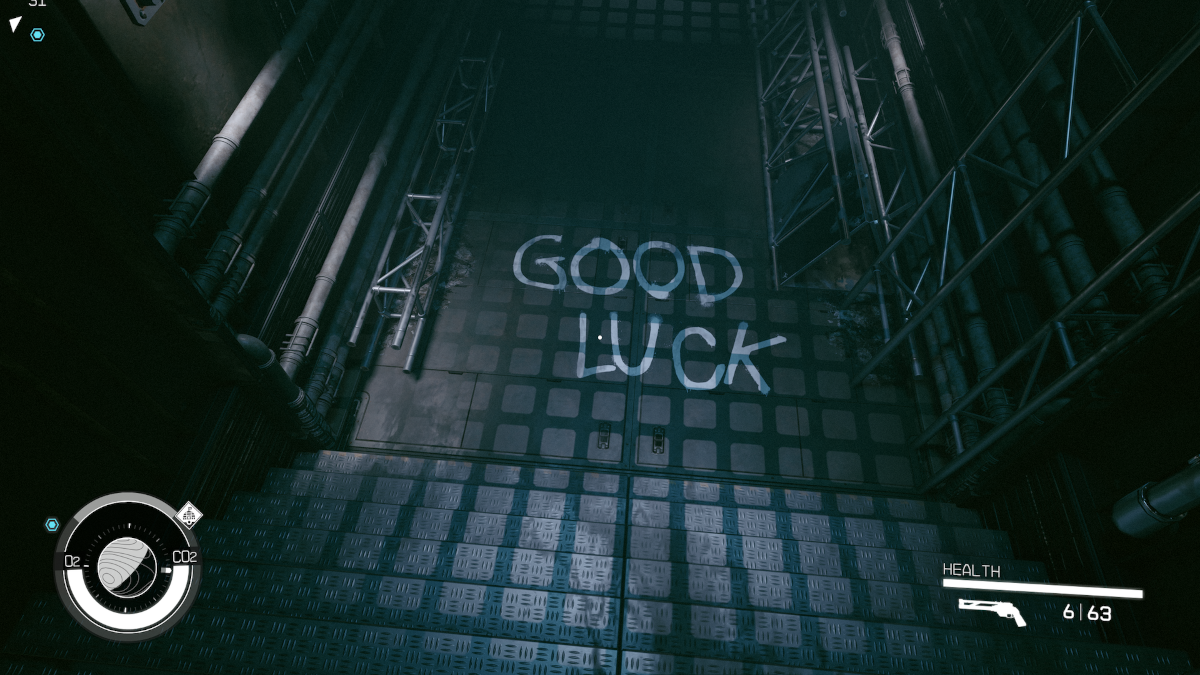
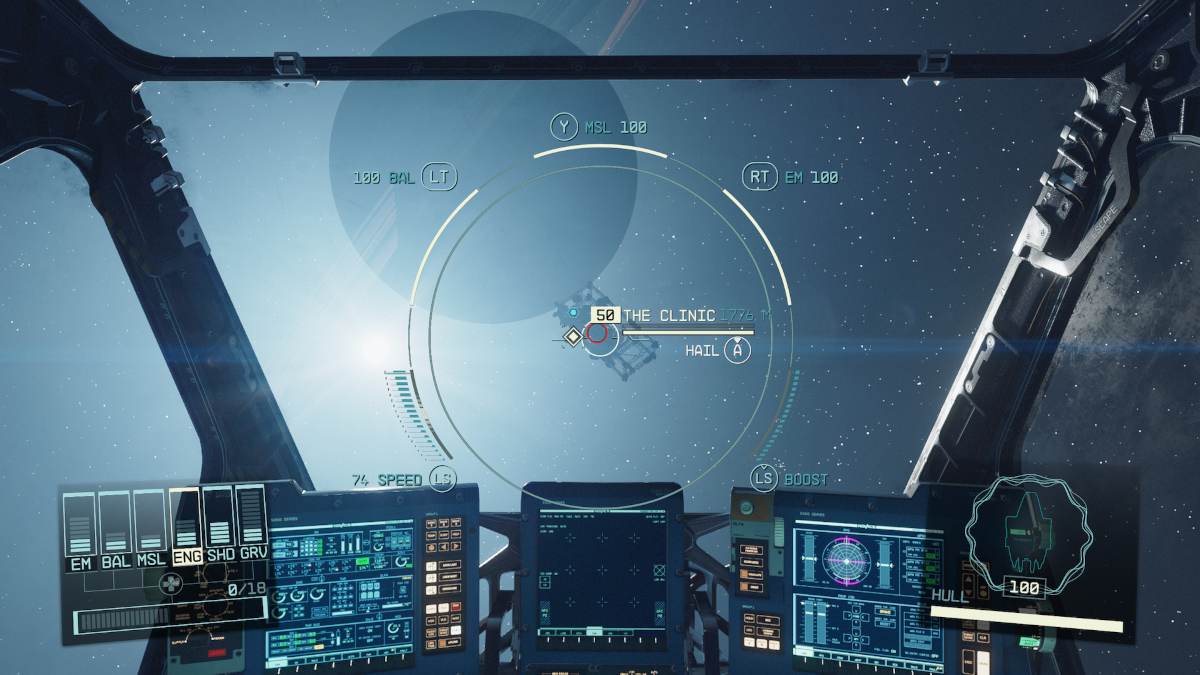
While I wouldn’t call combat in Starfield “hard,” its poorly balanced enemies could make for unpleasant encounters. Being able to dial down the difficulty of combat in the game has been a lifesaver, especially in space. Easing difficulty of space combat has had the most appeal, since I have disliked the game’s approach to these battles since day one. Starfield’s ground combat was neither wholly dreadful nor terribly dissimilar from the likes of Fallout 4. My personal gripe with it stemmed from instances of having to fend off waves of spongy, glitchy enemies. These battles were exhausting and completely sapped any inklings of fun that may have been in tow. Switching over to easier combat has not necessarily made ground battles “easier” – I still die a lot, enemies still glitch out, and waves are still waves – but they have become more tolerable, and the switch has lent more immersion. I want to feel like the heroic, almost-invincible superstar that Bethesda games set out to do with player characters. Feeling constantly outmatched is no fun.
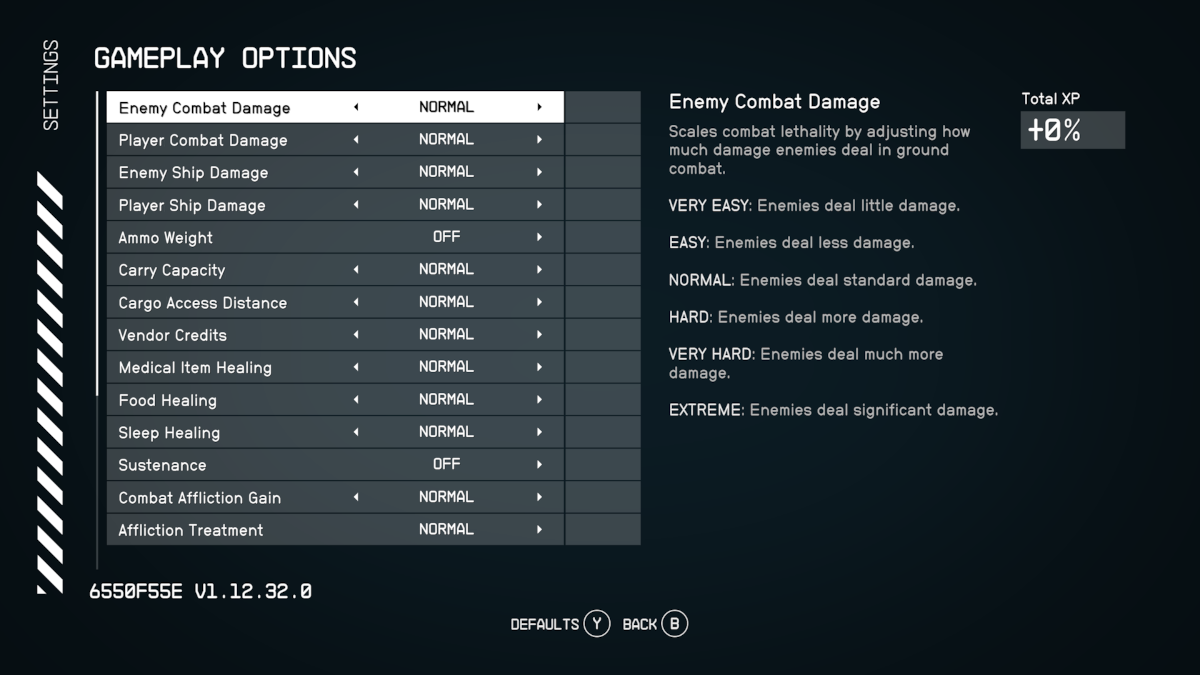
There is, of course, much more to these new difficulty settings than making combat easier, or harder, if that’s your thing. The image above shows some the options that can now be adjusted, which range from how deadly you’d like your environmental hazards to how much healing food provides. The harder you make the game, the more XP you gain, and vice versa if you want to make everything as bountiful and everyone as innocuous as possible. “Play how you want!” is my big takeaway, and for that, I’m grateful that the options I’ve chosen have helped me better engage with the game.

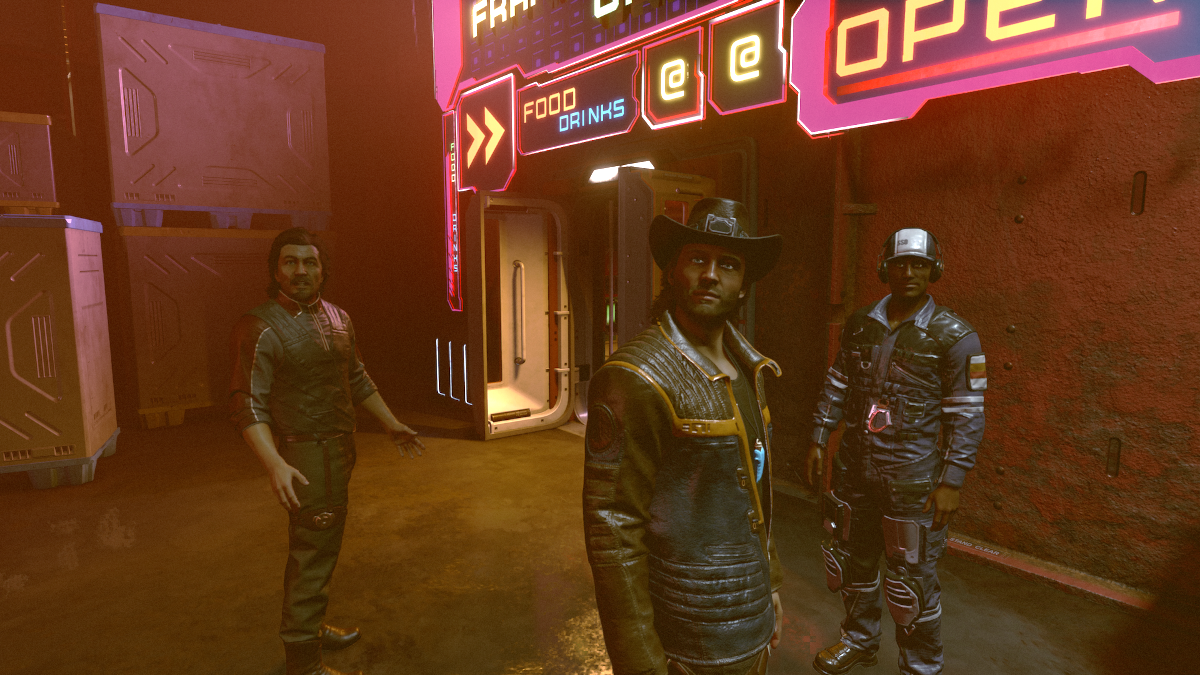
Speaking of which, having the ability to change to game’s dialogue camera is a literal game-changer. While it didn’t seem like a big deal at first, the camera zooming in uncomfortably onto speaker’s faces upon entering conversations quickly became my least favorite aspect of playing Starfield. I understand that Bethesda was probably trying to capture a little Fallout 3 magic with this way of interacting, but I disengaged every single time that camera zoom happened, because it was just so unsettling. The worst though was when a third person joined the conversation, when a speaker would continue staring at me while addressing them. These instances were downright confusing! Turning off the dialogue camera has restored my sanity in conversations. Now, not only do conversation happen a little more “naturally,” (a la Fallout 4), but people look at me when I’m talking to them, and they look away when they are talking to others. The system isn’t perfect, and it sometimes results in some very odd character placement, such as someone talking at you from across a room, but I’d much rather that than having to stare into the uncanny valley.
And what about all those valleys and hills on one thousand planets to scour? (How’s that for a segue!) Wayfinding in Starfield was, and still is, it’s own kind of mess. Bethesda games have never been known for their awesome maps, but at least they have them. The only maps Starfield had when it was first released were planetary topographical maps that were just as hard to read as a “local” map in a Fallout game. But, there were no maps for the main settlements, meaning that sheer memorization was the only way to get to that one place with that one supplier of that one thing you always needed. Now, there are maps for various settlements, and they aren’t half-bad. Could they be better? Sure. Did they make it so that you have to re-visit all the locations in a given settlement so that they can become fast-travel points? Yes. But then, did they add settlement location icons to your on-screen compass? Yes! That’s the real kicker, because it makes locating spots in settlements so much easier, and you then don’t even need to bother with the full map if you don’t want to.
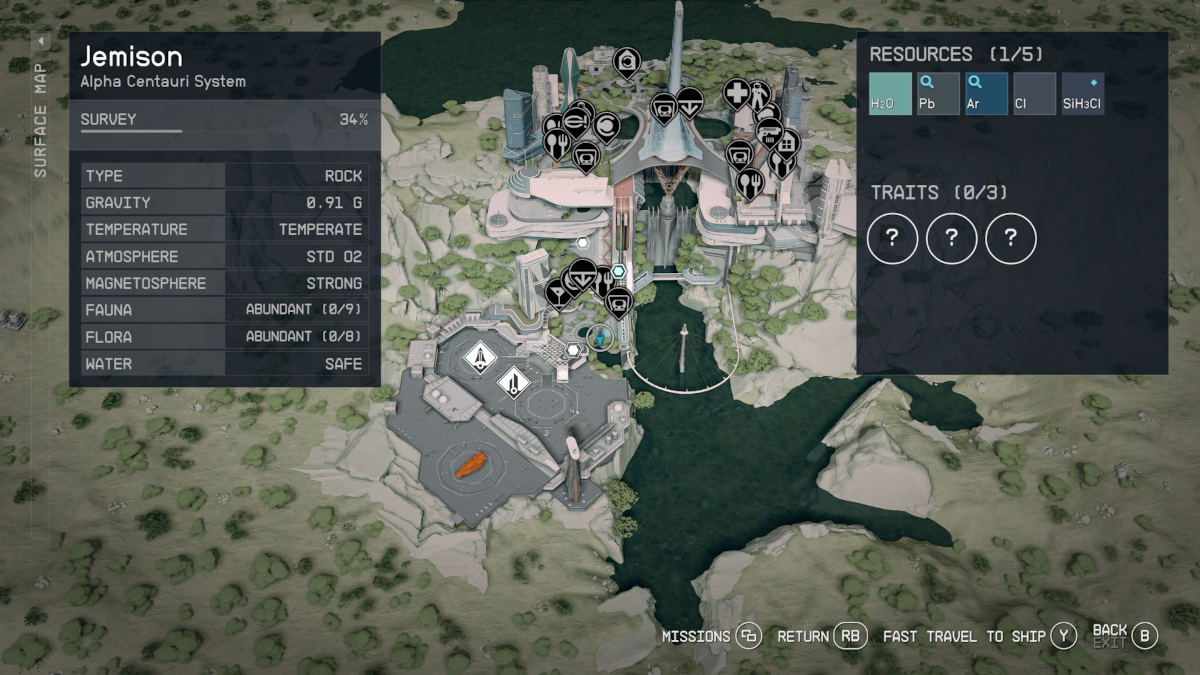
These additions and adjustments may seem like small drops in the big barrel of issues that still plague Starfield, but as a returning player, together, they have made a huge difference. I can forgive a middling story when given the opportunity to be both an intrepid space explorer facing the unknown and the singular hero that the galaxy needs. I can overlook some glitches as long as backdoors open that enable progress. And I can deal with whole lots of empty space if I can play my own way in the moments in between. Look out space pirates, I’m back!
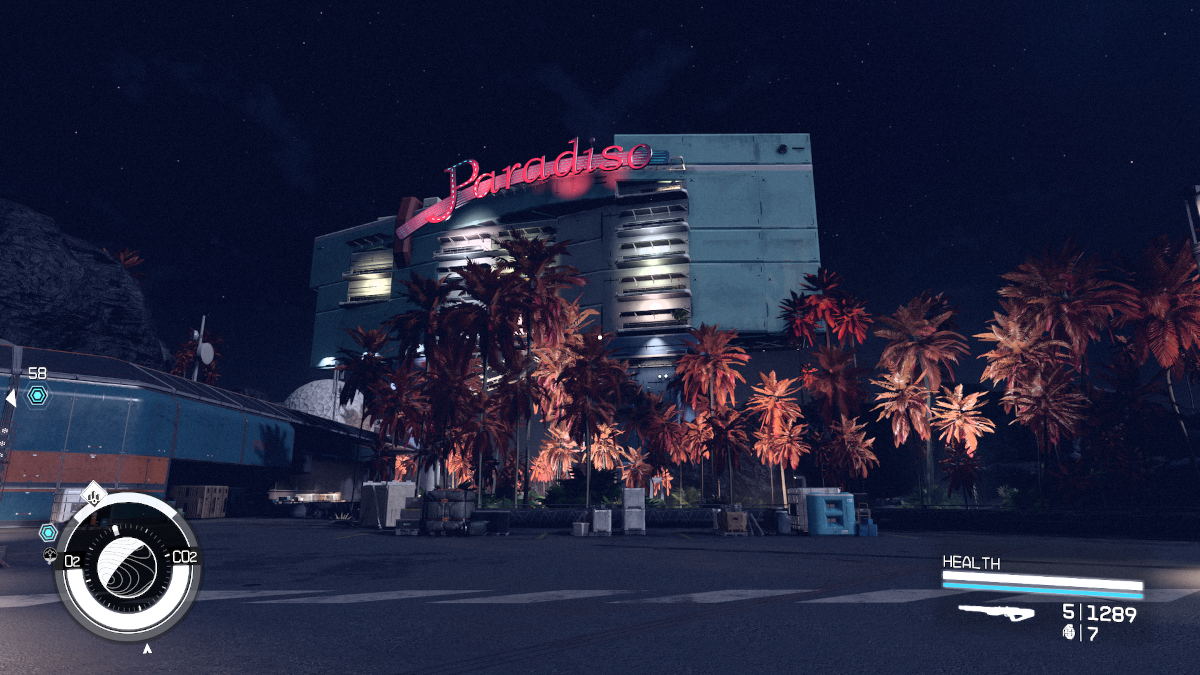
All images, including lede, were captured by author during Xbox Series S gameplay of Starfield (© Bethesda Game Studios).
 VIRTUAL BASTION
One Comment
Comments are closed.