Upon loading up The Call of the Elder Gods for the first time, I was asked if I had played its predecessor, 2020’s Call of the Sea. I had not, and I must admit that there came a point in The Call of the Elder Gods where I wish I had. After I completed it, I watched a walkthrough of the previous game, and, indeed, it did tie together a few odd strands that permeated the sequel. This is not to say that The Call of the Elder Gods doesn’t stand on its own, because it does have legs, strong ones that take players on a strange and compelling eldritch-inspired journey through time and space.
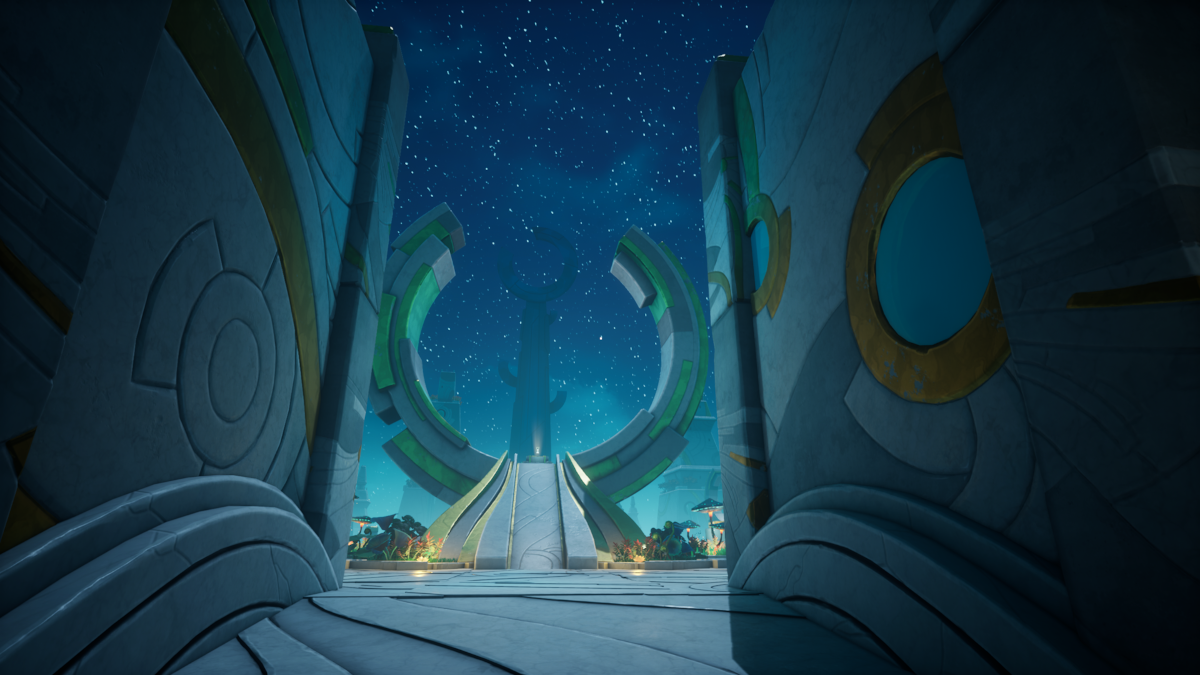
Remniscent of H. P. Lovecraft’s 1936 story, The Shadow Out of Time, in which a professor and an ancient alien race swap minds, The Call of the Elder Gods presents two protagonists. One is Professor Harry Everhart, who’s afflicted with seeing strange visions of oily, black shadows. (Aside: could not shake from my head Shepherd’s nightmares of the same in Mass Effect 3!) The other is Miskatonic University student Evangeline Drayton, who’s haunted by dreams connected to an ancient artifact, which is also linked to Everhart. Drayton seeks out the professor to help her understand her dreams, and they eventually link up and end up working together to solve the mystery behind what it is they’re seeing, or “seeing.” The game’s story nicely blends heavier themes surrounding loss, family, and prickly history with a lighter, if horror-inspired science fiction flair. While serious, the game never took itself too seriously, and playing was never a chore, as it offered all linear-style substance with no filler.
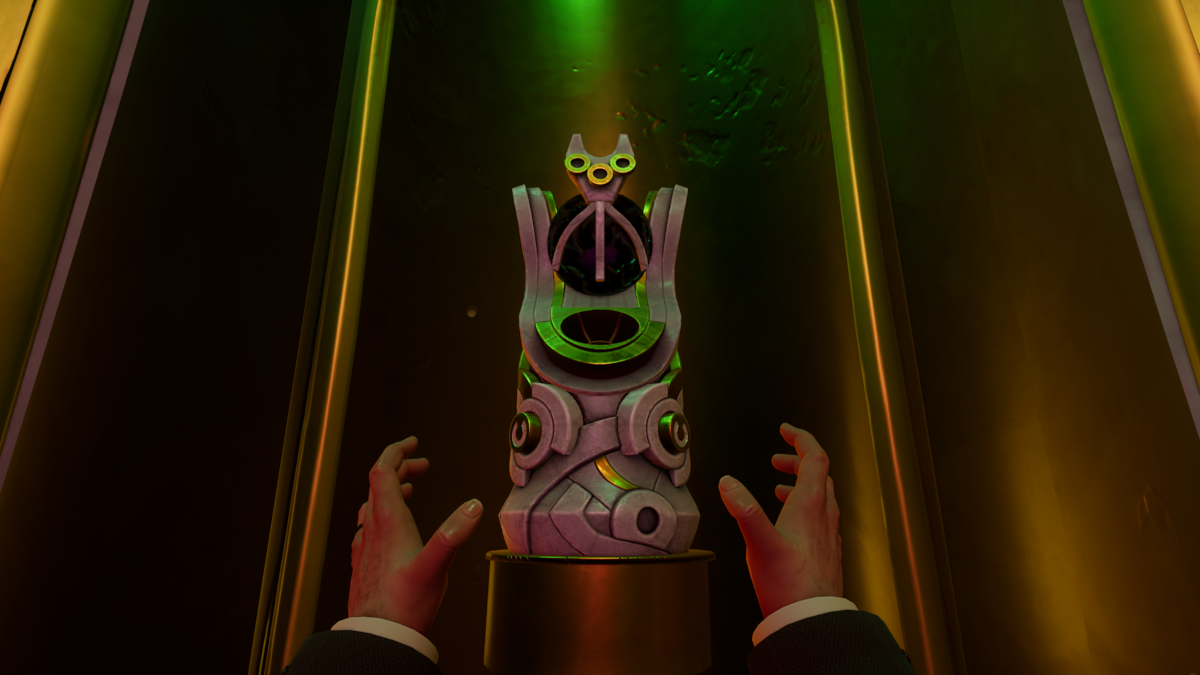
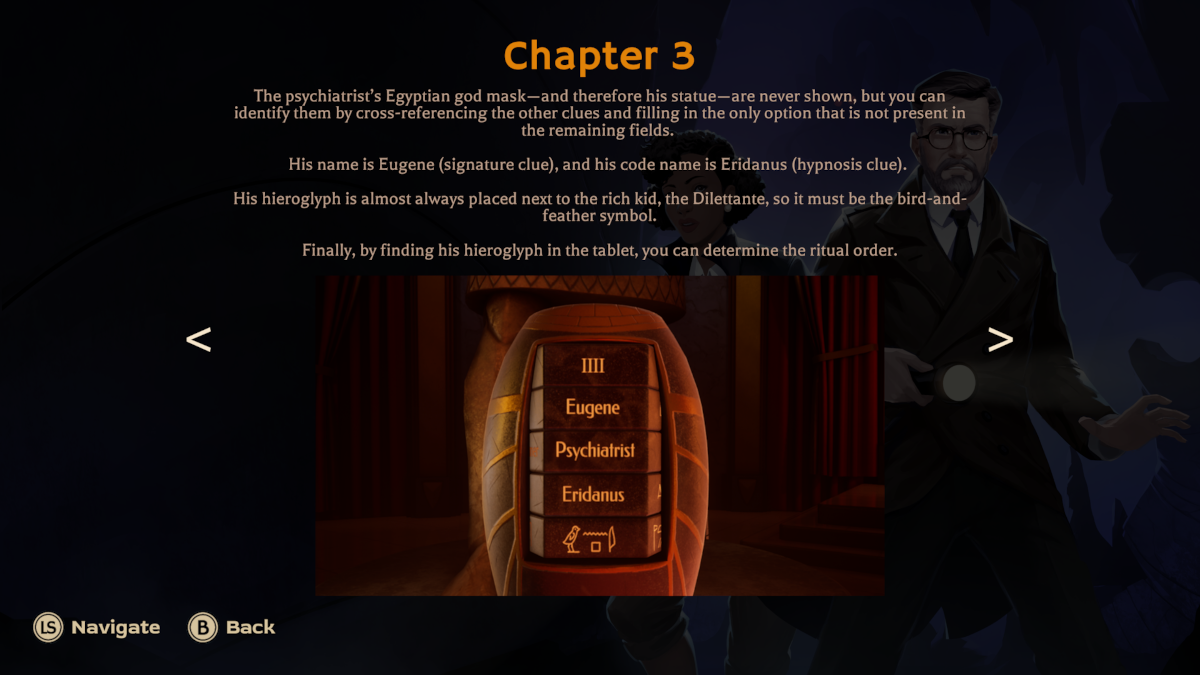
Speaking of gameplay, The Call of the Elder Gods is purely about exploration (mostly movement, pointing-and-clicking in 3D, and keeping track of information in a journal) and puzzle-solving. There was no combat, no inventory to manage, and no NPC interaction outside of when Drayton and Everhart appeared together. In such cases, players took control of one character or the other and was allowed to switch between the two only when needed for puzzle-solving purposes. And what about the game’s puzzles? They were, um…okay until they weren’t. My wits in puzzle games can have rather short fuses, though I think I do try my best to find solutions before seeking outside help. I completed the game in about eight hours, and I’d say I made it roughly halfway through before its puzzles became too circuitous for me to wrap my head around. Rather than go to the Internet, however, I had turned on hints in the games settings and used them instead. Though, fair warning to new players who turn them on as well, “hints” they were not – they were outright solutions! No complaints from me, as I’m all for developers offering options to provide players more help than less with their games but having puzzle solutions so readily at hand initially came as something of a surprise.
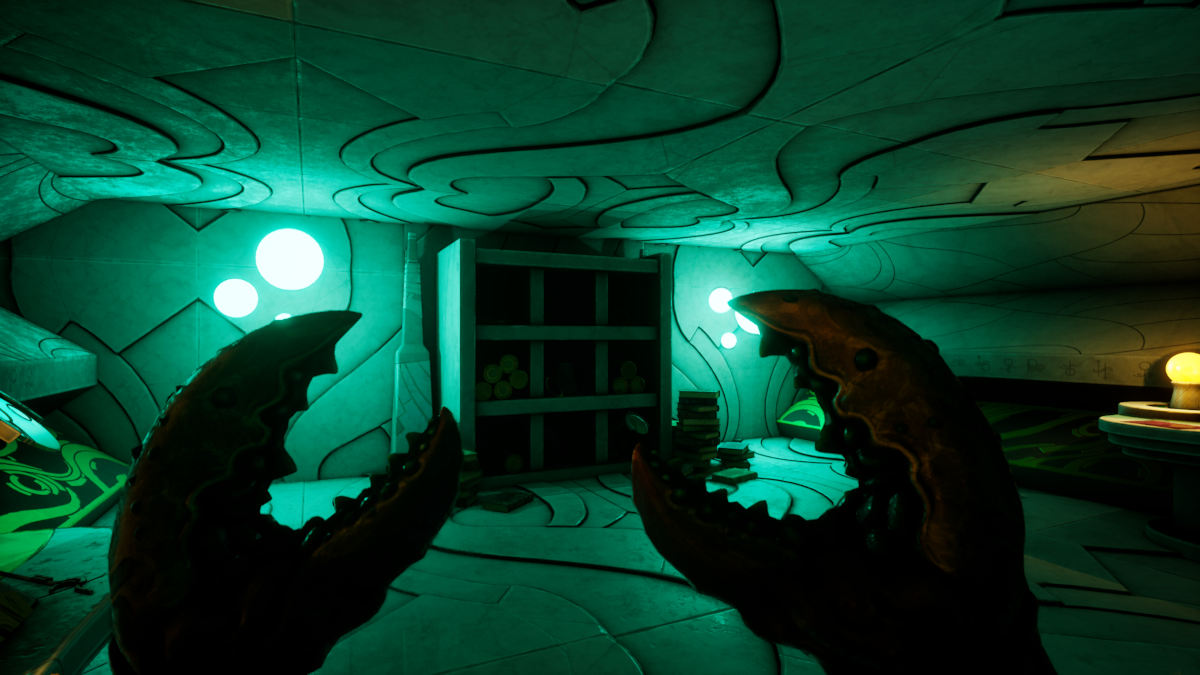
Visually, The Call of the Elder Gods was as vibrant and striking as it was wild and unusual. Its depictions of various spaces, from historical sites to out-of-this-world vitas, snowy mountains to dry deserts, dorms rooms to underwater caves, were all rendered with Lovecraftian vibes and never disappointed. Once the game’s world opens up from simply being “earthly” and leans into the whole “elder gods” mystique, it welcome in the weird and pushes away the boundaries of normal. I’ll admit that each time Drayton’s and Everhart’s adventures veered into stranger and more eerie places, it took some time for me to adjust. There’s nothing particularly scary in the game, but its underlying veneer of existential dread and alien space made for unsettling territory. In a way, the game never quite felt grounded. But I suppose that’s how things go when dealing with eldritch-y and supernatural states – things always feel a bit off for unseen reasons.
Despite its handful of difficult puzzles, The Call of the Elder Gods was a delightfully odd experience. It’s a well-written game that’s presented in a beautiful and otherworldly fashion, and that can be completed over a weekend or two. As a direct sequel to Call of the Sea, I’d believe that having it under one’s belt probably does help fill in several plot points presented in this sequel, but it isn’t an absolute necessity. The story still flows along at a good clip. And it’s great that there’s little downtime to be had, because solving a good mystery is reason enough to heed The Call of the Elder Gods.
All images, including lede, were captured by author during XBOX gameplay of The Call of the Elder Gods (© Out of the Blue Games.)
 VIRTUAL BASTION