If the Internet has anything to say about it, the world won’t soon forget Fallout 76’s maligned 2018 release. Aside from a multitude of bugs and gameplay issues like poor enemy scaling and general broken-ness, the game’s world was empty. Oh, there were places to explore and lots of new sights to take in, but there were no humans around to give out missions. Instead, quests were doled out via holotapes and by accessing computers. While this was in keeping with the “make Appalachia your own” mantra gleefully spouted by Bethesda’s head honchos, it didn’t necessarily sit well with players. Granted, the game’s busted state simply made it hard to do the one thing the game promised – to play with others – but to double-down with the seeming lack of a coherent story to help guide folks didn’t help matters any.
I started playing the game in the summer of 2019, sometime between the game’s Wild Appalachia update and the addition of a battle royale mode called Nuclear Winter. Humans were still nowhere to be found and regions were “defined” by their levels (i.e. stay away from the Cranberry Bog as a low-level character!). At the time, multiplayer was my primary means of playing, and because of how haphazardly the quests were dealt out, we usually ignored them in favor of just exploring the map. That, itself, made the game fun; and it was a bonus if we “accidentally” completed a quest or two along the way. I’d later branch out solo with three different characters, and while I’d complete all the quests available to them, there was hardly any method to my questing madness.
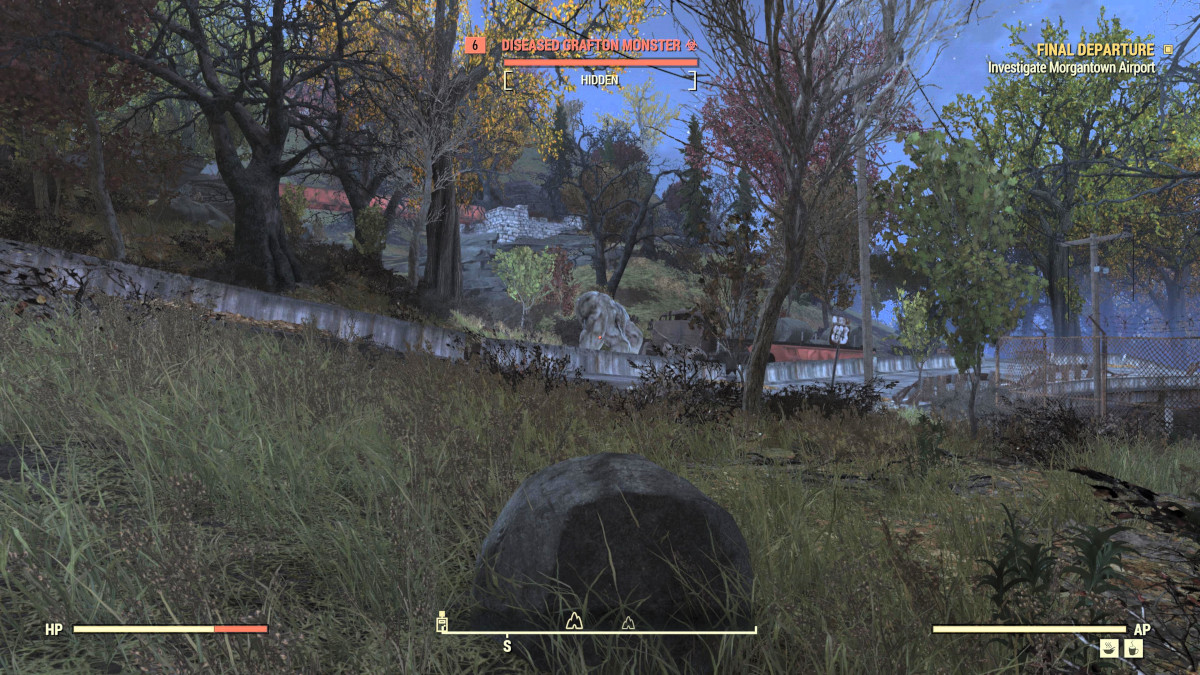
I mentioned before that with this new playthrough I’m doing, I’m approaching the game with an actual method, mad as it may seem. I’m tackling the game chronologically according to its various expansions and updates, because honestly, I don’t remember much about why West Virginia was in the state that it was in at first, other than “nuclear war.” Several different groups had populate the region, but where did they all go? And further, would the return of humans to the region make sense? I guess fifth time’s a charm (this is my fifth character, you see), because the game’s original story, its original missions, are so much more engaging and thoughtful (to a point) than I think I ever knew.
*Fallout 76 story spoilers ahead!*
As Fallout fans know, when the bombs fell in October 2077, some portion of the American population retreated into underground vaults, while the rest of humanity either perished or managed to survive. Twenty-five years later, in 2102, the residents of West Virginia’s Vault 76, the “best and brightest minds” of their time, were to leave the vault and help reclaim the region. In the present day, the vault opening occurs, and after a hearty pre-Reclamation Day party, your character oversleeps and ends up being the last to leave. Originally, oversleeping implied that you had just been in the vault for an extra day or so. With the Wastelanders expansion and the re-introduction of humans, the timeframe was changed to a year! How’s that for “oversleeping!”
Upon leaving, if you wanted something to do, your first stop was a Mr. Handy right outside the vault. You’d ask if it had seen the overseer, and onward you’d go to follow her tracks. Currently though, while you can still ask that robot about the overseer, you have to talk to two “new” people outside the vault if you want to progress. They will kick off Wastelanders content, which you have to follow for a couple quests if you want to get to the original storyline. Because it used to be that tracking the overseer would lead you to her first holotape at a small camp south of Vault 76. Now, that holotape lives with the proprietor of a settlement called The Wayward, and you have to help her before she’ll give you the overseers’ tape. Once I had the tape, I let that questline be and returned to the original story.
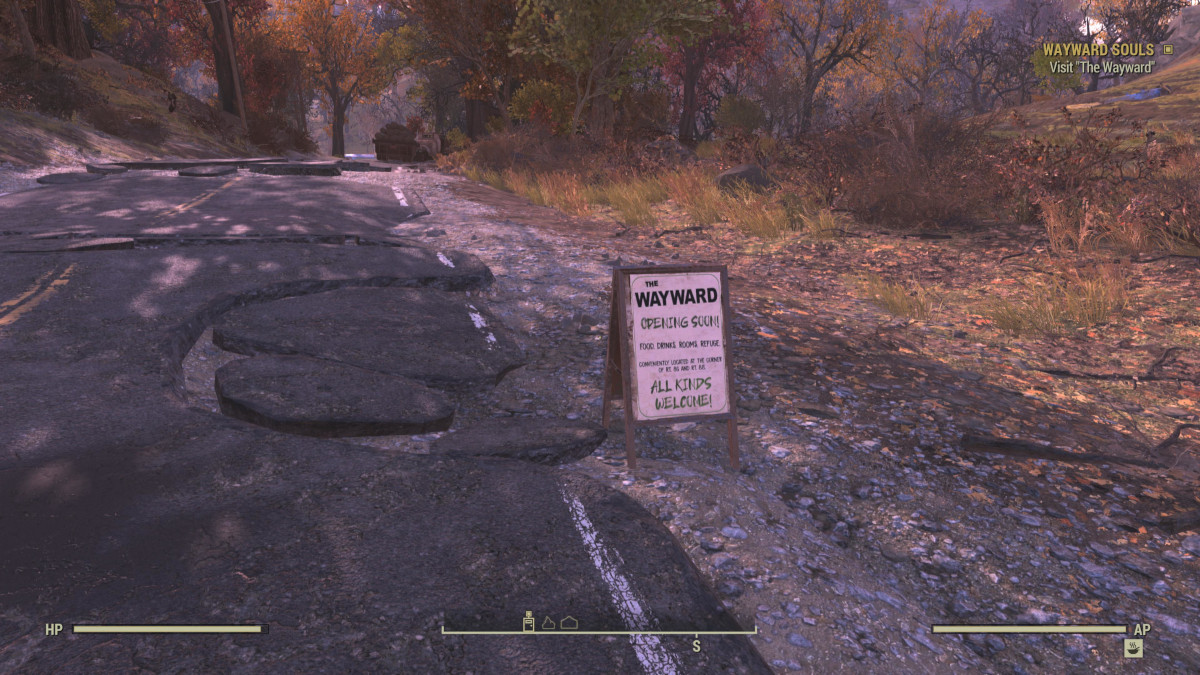
With the first overseers’ log in-hand, the story of “what the heck happened out here in the past twenty-five years??” began. Following the original quests in the order given not only takes players around the map generally, but the process also dives deep into explaining the state of the world. With all the game’s updates since, there’s certainly some dissonance now between what the overseer experienced (a human-less world) and what the player sees, but if you don’t stray too far off the beaten path, you can still get a pretty good taste of what the game’s world was like at release.
The crux of the original story concerns five factions that entered Appalachia after the war. The first few quests take players into the world of the Responders, a volunteer aid group that set up shop in several locations to help survivors. After witnessing the remnants of their “last stand” against a new enemy, the Scorched, at a local airport, players are introduced to what were their primary rivals: raiders. Five raider groups called Appalachia home, and the players “meets” each one, learning about their members and tactics along the way. The raiders were also been wiped out by the Scorched, though their own infighting didn’t help, and neither did one raider’s devastatingly successful plan to destroy the capital, Charleston.
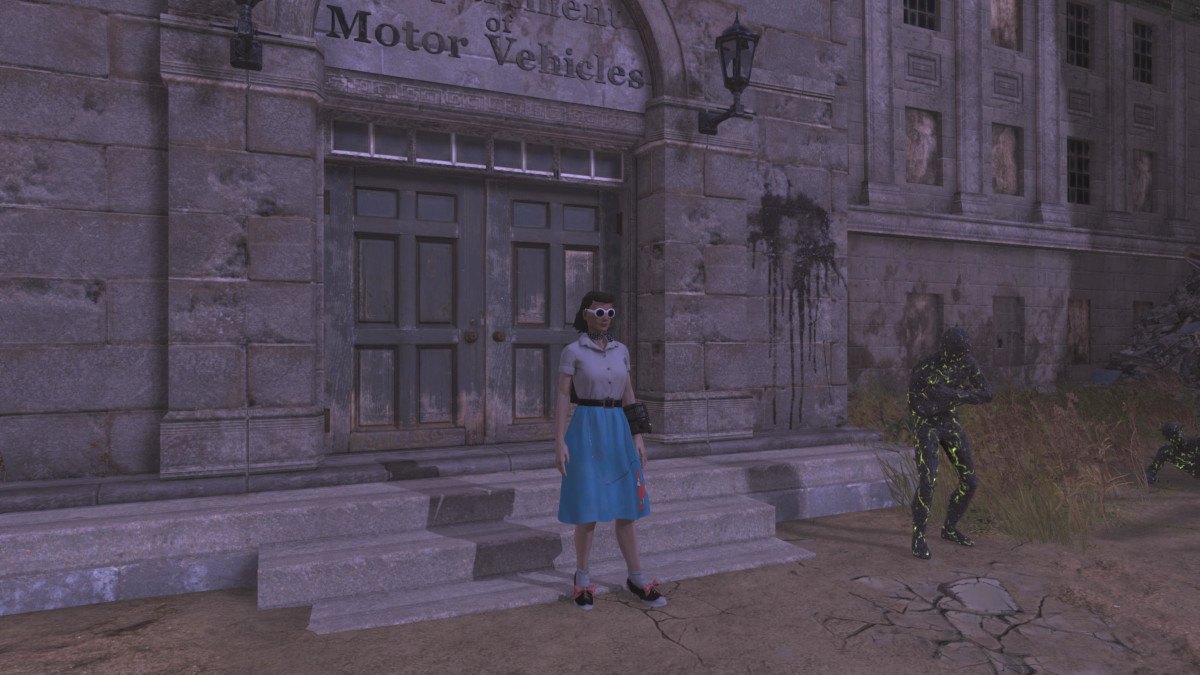
The series of raider-oriented quests leads into the world of a new group called the Free States. A paramilitary group of preppers before the war, these folks (traitors to some) seceded and retreated to underground bunkers. They had some contact with the Responders, thanks mostly to their main above-ground outpost at Harper’s Ferry, but they, too, were ended by the scorched plague. From the Free States, players then meet the Appalachian branch of the Brotherhood of Steel. Saviors to some and bullies to others, the BoS entered the region with their own internal problems and agenda. And just like everyone else, they met their match with the Scorched. The final group to enter the picture is the mysterious Enclave, the puller of all the strings. Discovering the role it played leads to an ultimate showdown and, potentially, the end of the scorched plague.
While the game’s original story might seem like fluff now, what with how much the game has changed, it’s purposefulness and cohesiveness is makes it stand out among Fallout stories generally. The quests build logically and flow naturally from one to another like a good story should. There’s no bloat n the main story, no unnecessary busy work – it’s just one solid line from story beat to story beat. Yes, the game throws so much else at players to do, from multitudes of miscellaneous quests to events, but the main story perfectly explains the setting in which all the player-led action takes place. Things do take a schmaltzy turn when, during the BoS questline, the overseer outrights pleas via tape that all the Vault 76ers now must work together to take down the Scorched. That players shouldn’t repeat the mistakes of their well-meaning and well-equipped predecessors, because only by sticking together can everyone succeed. At the very least, that is what Fallout 76 is all about…if you want it to be.
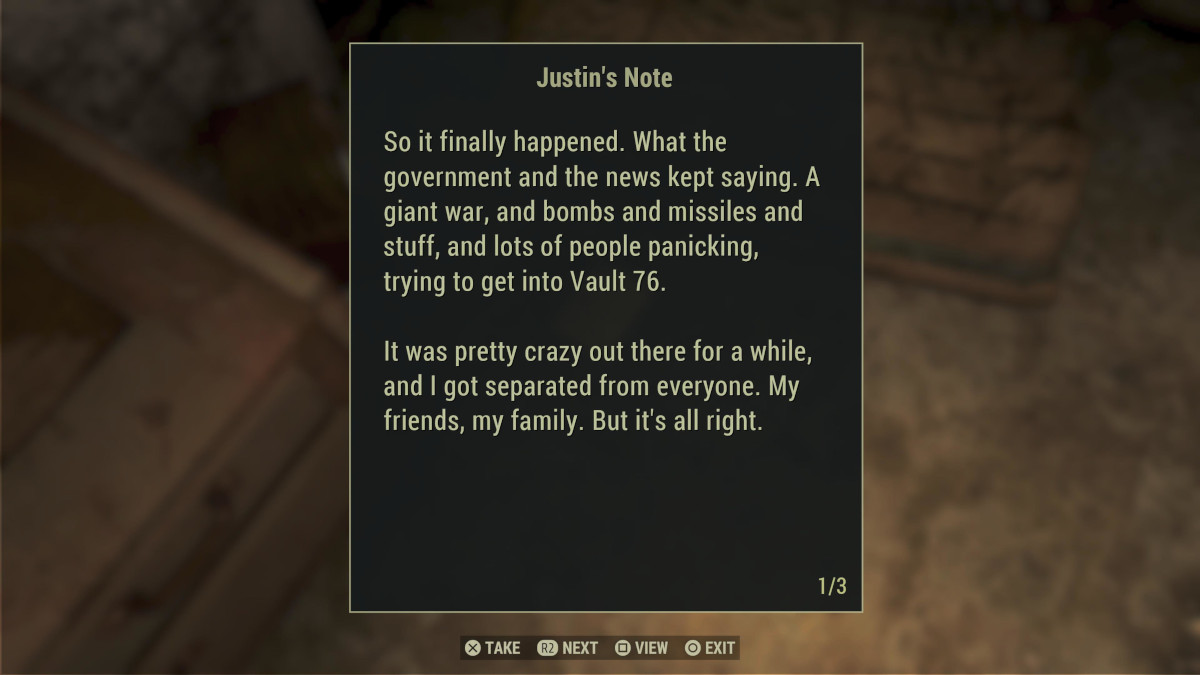
In Fallout 76, you can “make Appalachia your own,” and experience the game in any manner you want. I’d highly recommend, though, that new folks don’t sleep on the main story. Granted, the in-game rewards for doing so aren’t as great as they once might have been, but playing through well-written, meaningful quests is its own reward. And with the main story comes some pretty great original side quests, too. (the Order of Mysteries is a particular highlight.) I’m no Fallout expert, but I know a good story when I play one, and Fallout 76’s main story is very, very good.
All images, including lede, were captured by author during PS5 gameplay of Fallout 76 © Bethesda Game Studios, Bethesda Game Studios Austin (2018-2024).
 VIRTUAL BASTION
Fallout 76 had a redemption arch? That’s excellent to hear! How does it compare to the other Bethesda developed Fallout games?
LikeLiked by 1 person
Ooo, seems I’m catching up on comments in an odd way. 🙂 So, taking New Vegas out of the mix, I’d put 76 in a close second place to Fallout 3, and several rungs above Fallout 4. Fallout 3’s story is unwavering in its approach, while Fallout 4 just sort of goes all loosey-goosey and gets lost along the way. While Fallout 76’s main story is almost as concise as Fallout 3’s, but it does make you work a little extra to get to the payoff. As for the earlier games, while I know of them, I’ve not played them, so if/when I do, I’m sure my rankings will change. I hear they are pretty good.
LikeLiked by 1 person