Now that I’ve gotten my platinum trophy in Saros and some time has passed, I think I can do a fair comparison between Housemarque’s two most recent games. I think it’s an important comparison to make too, because the games are different enough that calling Saros a “sequel” is actually a bit of a misnomer. I might have called it one in my first impression of the game, but, yeah, that was probably a bit premature.
Starting with the similarities, both Saros and Returnal are both 3D bullet hell shooters with roguelite elements. They share a base moveset, have a sci-fi setting, deal with loops and their narratives focus heavily on cycles of pain and regret (among other things). Both games also task players with fighting their way through increasingly difficult biomes and overcoming area bosses for each. So yeah, Saros is a sequel if you look at it broadly. However, there are some important differences.
For one, Saros gives players more moves to play with, most notably Arjun’s energy shield, parry and access to power weapons. He has a great many more options in the midst of combat than Returnal’s Selene, who can only jump, dash or grapple her way out of danger. Alt-fires of Saros’ weapons are also much more usable at the cost of being much less powerful than those in Returnal. They function as a niche, but always available option rather than an opportunity for burst damage that’s only available some of the time.
Burst damage is handled by power weapons in Saros, and they’re supposed to be available in the same way that alt-fires used to be in Returnal. However, they’re very, very easy to abuse thanks to the Power Generator weapon trait, which charges them via inflicting damage with Arjun’s primary weapon. Finally, Saros allows players to start at their most recently reached biome rather than asking them to get halfway through the game before creating a checkpoint as in Returnal.
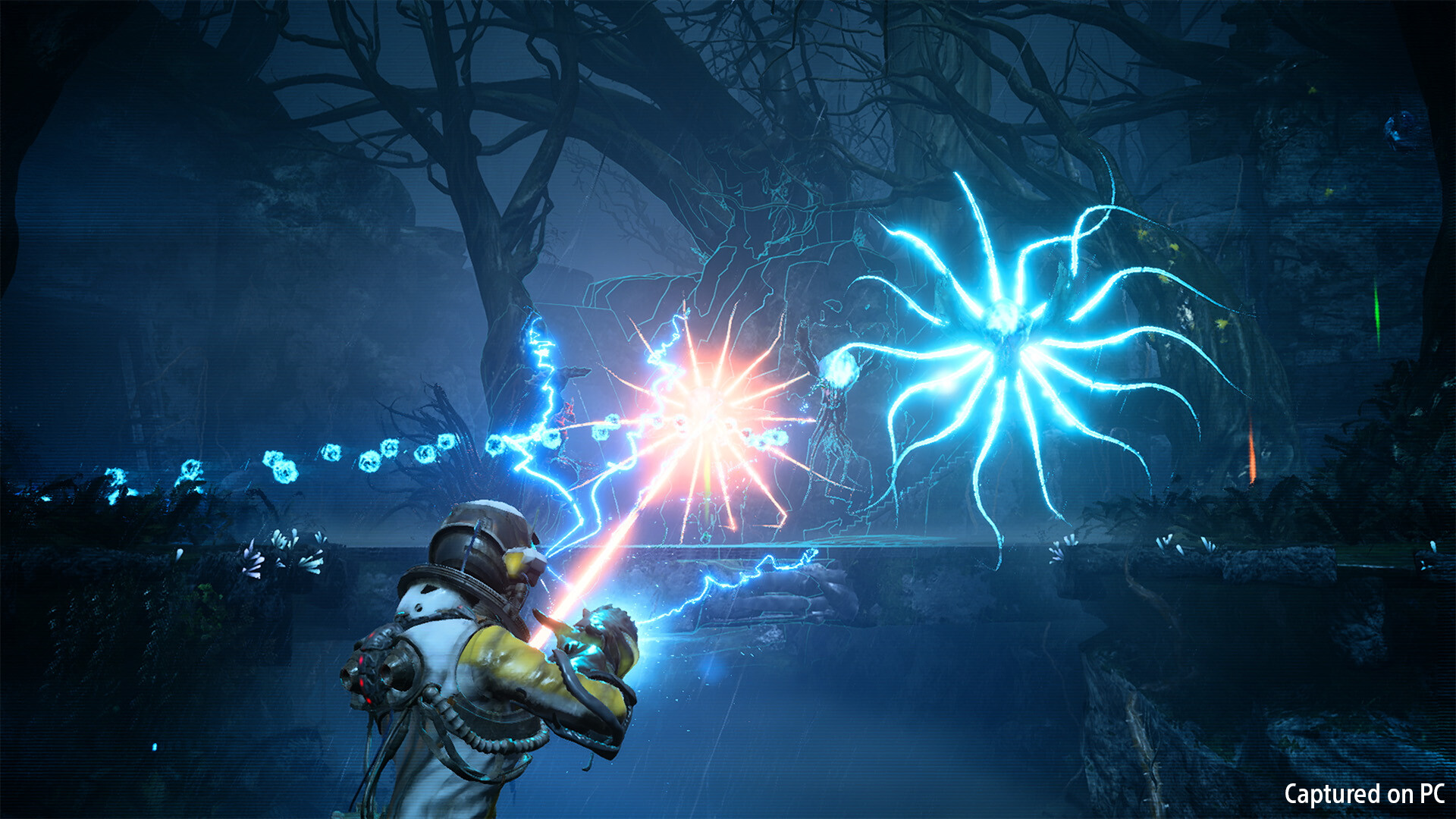
The addition of permanent attribute upgrades and optional modifiers to adjust difficulty combines with all of this to make Saros a game that’s much easier to get through than Returnal. Finally, it’s much more predictable as the pool of rooms that Saros draws from when it constructs its biomes seems much smaller than that of Saros. There’s also an overall lack of things like challenge rooms and secret chambers, which make its world feel more real at the cost of Returnal’s more arcadey feel.
So yeah, they share a lot of DNA, but these are still two very different games. So, it’s not so much that Saros is a sequel to Returnal but rather Returnal taken in a different direction. I definitely greatly enjoyed both games and both have their strengths and weaknesses, but, in the end, I think I prefer Returnal overall. It’s not necessarily because it’s better, but rather because I enjoyed its more arcadey structure, greater variety of rooms/enemy encounters, and a greater need to really push my skill with Selene’s abilities.
I like Arjun’s shield and parry a lot, but even with modifiers on to make it harder, the encounters don’t force greater skill expression with them like Returnal does with Selene’s abilities. I suppose this sounds like I just wanted a harder game, but it’s more that I just wanted more opportunities to use all the cool moves available to me. I really wanted that flow that Returnal inspired. Saros does bring it out, just not as often.
I will say, though, that Saros is probably a bit stronger in terms of narrative and its environments. Returnal delivered its story infrequently in small pieces and it gave you very little in the way of solid facts or events. Everything in Returnal is up to your interpretation, which, while making for a very thought-provoking experience, is a bit unsatisfying. You can only form an idea of what’s going on; you can’t know.

Saros dabbles in this too, but there’s a lot more solid ground to stand on storywise. We know more or less what led the characters to Carcosa and the things that haunt them. It’s a much more traditional story than Returnal’s in terms of structure, and I think that helps ground it and give it more weight. I might not like Arjun as a person, but it was a lot easier to get invested in his story than Selene’s, even though hers is the more compelling one once you dig into it.
So, after considering everything, I think that Returnal is still, for now, the better game. Its structure makes it more replayable and its design pushes its players to get the most out of their tools, making them become more skillful the more they play. Saros has the potential to push past Returnal, but that depends on whether Housemarque adds something like the Tower of Sisyphus later on that creates opportunities to get more use out of Arjun’s abilities.
Both games are fantastic in their own way, though. If you’re more interested in a good story that’s easy to follow, then Saros is your game. If you’re looking for greater heights in gameplay, though, then I recommend Returnal. Still, you really can’t go wrong either way here.
Have you played these games? How do you think they compare? What’s another pair of games that you think compare in an interesting way?
Image from the Housemarque website.