Back in January, I listed MIO: Memories in Orbit as one of my most anticipated games of the year, and it one that I thought I’d have to buy. Color me surprised when it popped up on Game Pass upon release! With a winter plate too full of games, spring has arrived, and MIO’s time has finally come. After putting a few hours of this new platformer under my belt, the question now in my mind is: will I want to purchase MIO when all is said and done? Based on what I’ve played so far, that decision is on the fence.
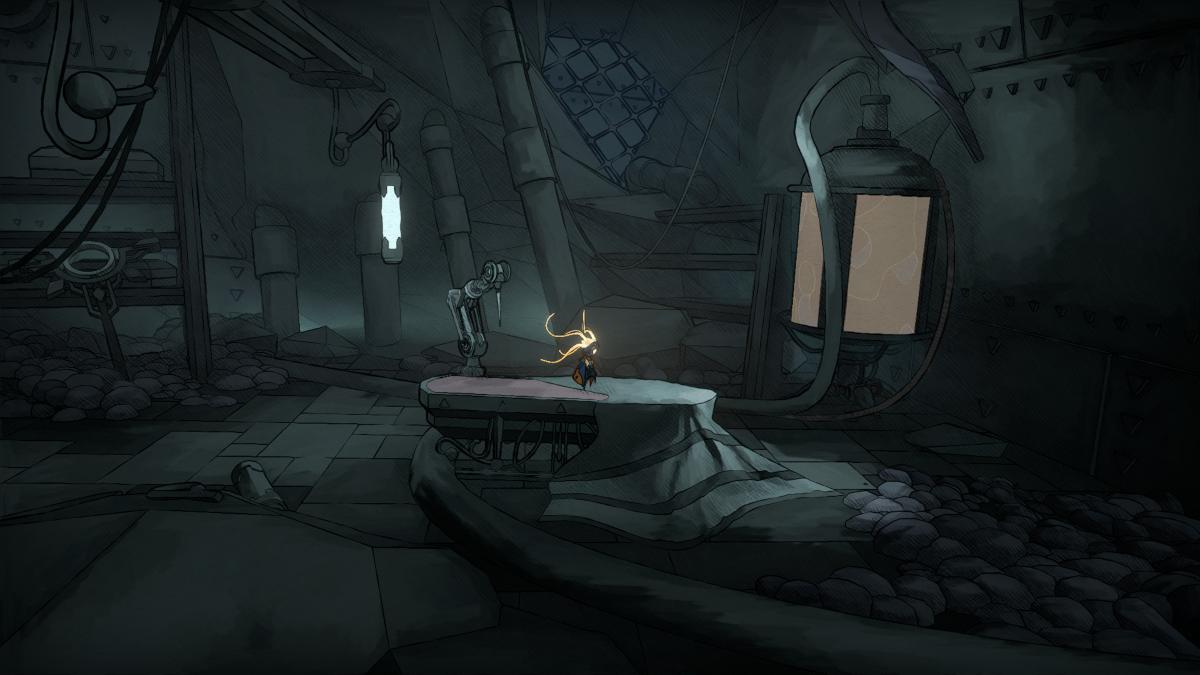
At its outset, MIO’s story is a little oblique. Players take on the role of a character, Mio, that must guide a techno-mechanical ship to safety. The ship, called The Vessel, is inhabited only by robots, as its human crew has perished. Some of these robots are designed to help Mio in her quest; others are enemies. Ultimately, Mio must locate several “pearls” that together will somehow help The Vessel complete its voyage.
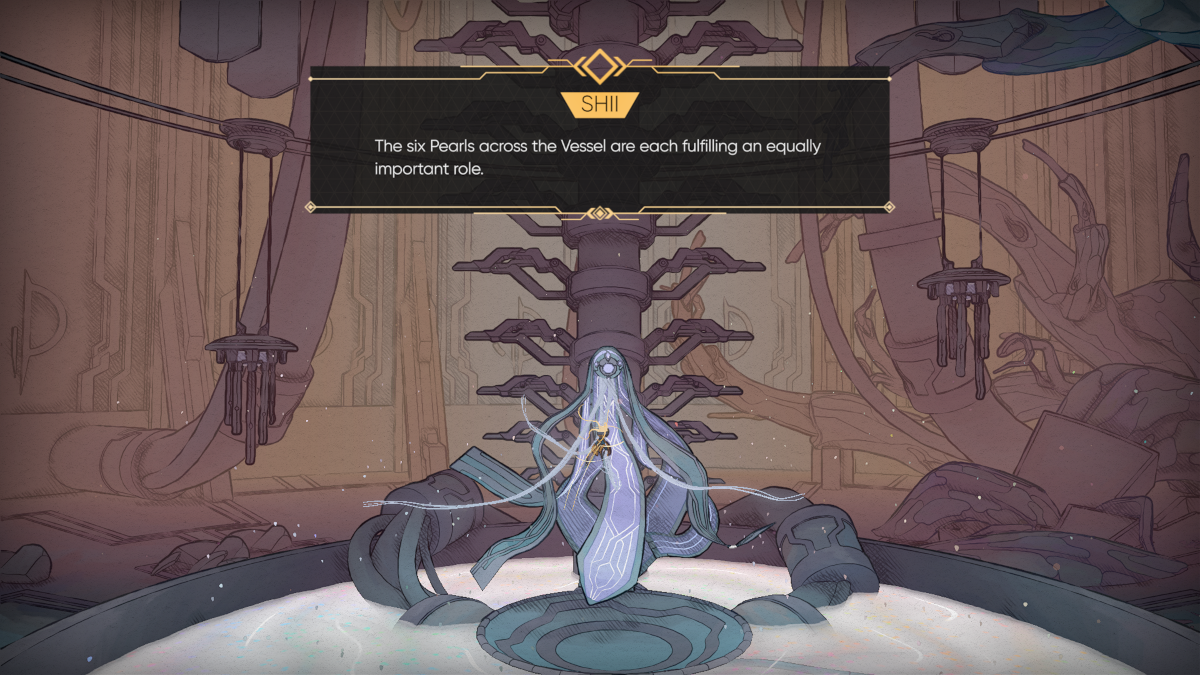
Or, that’s what I think is going on. The game’s story is presented rather abstractly, in a non-linear fashion. But as with many platformers, story tends to take a backseat to the action, because one’s focus is one traversal, exploring and opening a map, finding upgrades, and boss battles. A key in MIO’s success as memorable platformer lies in how well its overarching story is interwoven with its action and whatever else lies in store. At the very least, MIO is so visually stunning, it’s enough to keep me both invested and mesmerized. Whatever style(s) the game is drawn from, I just want more.
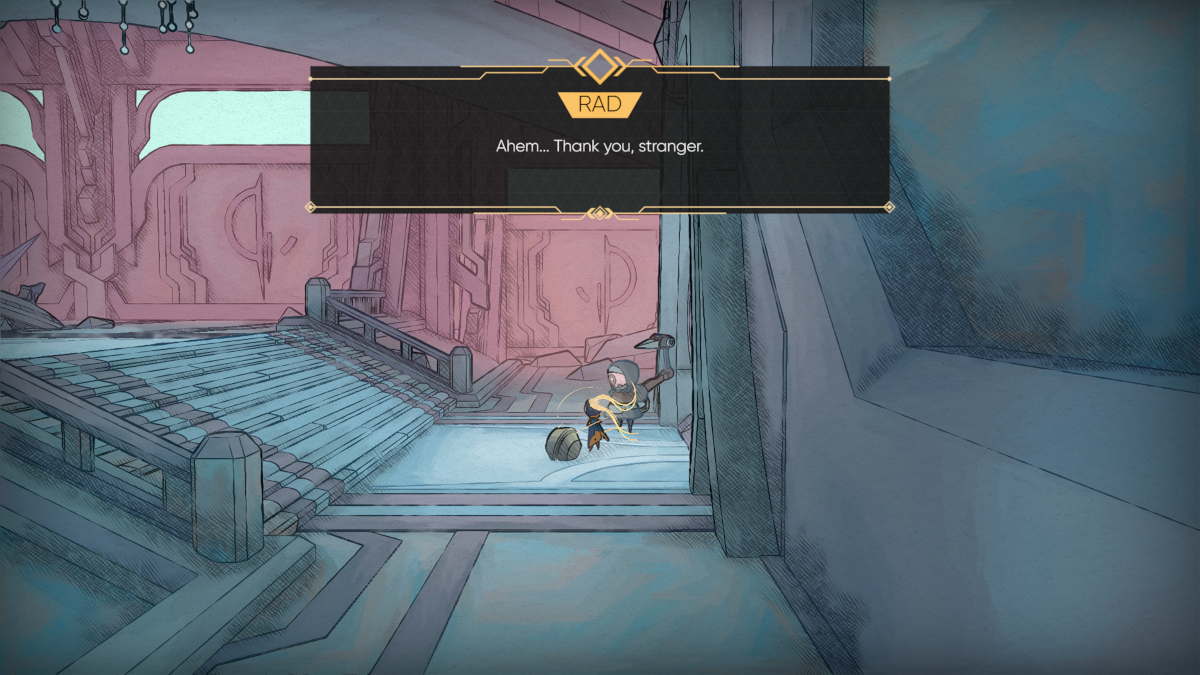
I’ve remarked before that my relationship with platformers, metroidvanias, what have you, has cooled quite a bit over the years. I will always have a soft spot for them, but no longer do I have to time to master them to the Super-Metroid-degree that I want. But MIO, it turns out, has an ace up its sleeve with regard to accessibility. For one, Mio can double jump from the start, which is an absolute boon and makes the game feel less burdensome from the get-go. Beyond that, there are three optional accessibility features that can be enabled. One prevents automatic attacks from all regular enemies – they only attack if Mio attacks first. Another regenerates Mio’s shields when she remains on the ground for a short time. And a third “erodes” bosses, making them easier to battle each time they are faced.
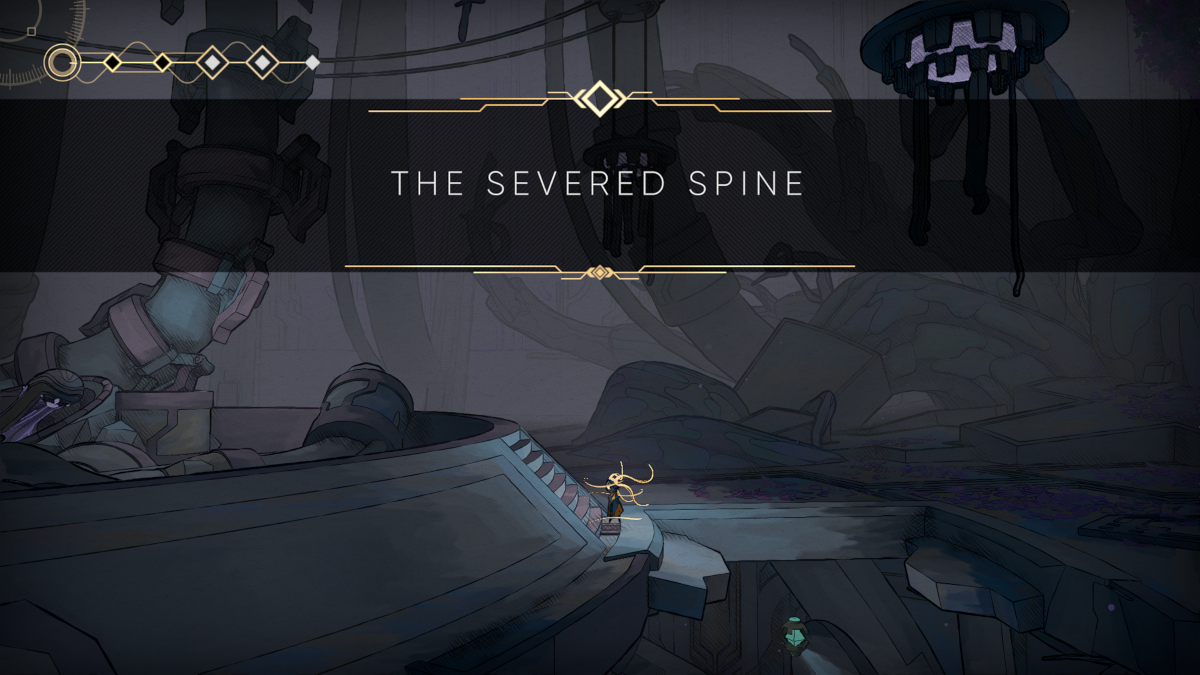
I turned on all three options to see how they worked, and I definitely like and will be keeping the first two. The “erosion” of bosses remains questionable, and I’m not sure it actually works as its says. It took several frustrating tries to beat the game’s first major boss, even though it was noted as being weakened each time I faced it after the first encounter. I did see that its health bar was ever so slightly lower in subsequent encounters, but the thing still hit hard and was generally unforgiving. Mio is decently agile, but the battle required a lot of patience combined with pretty precise timing. I’m all for a challenge but not for being punished for the sake of it. How well my nerves hold out against future bosses remains to be seen.
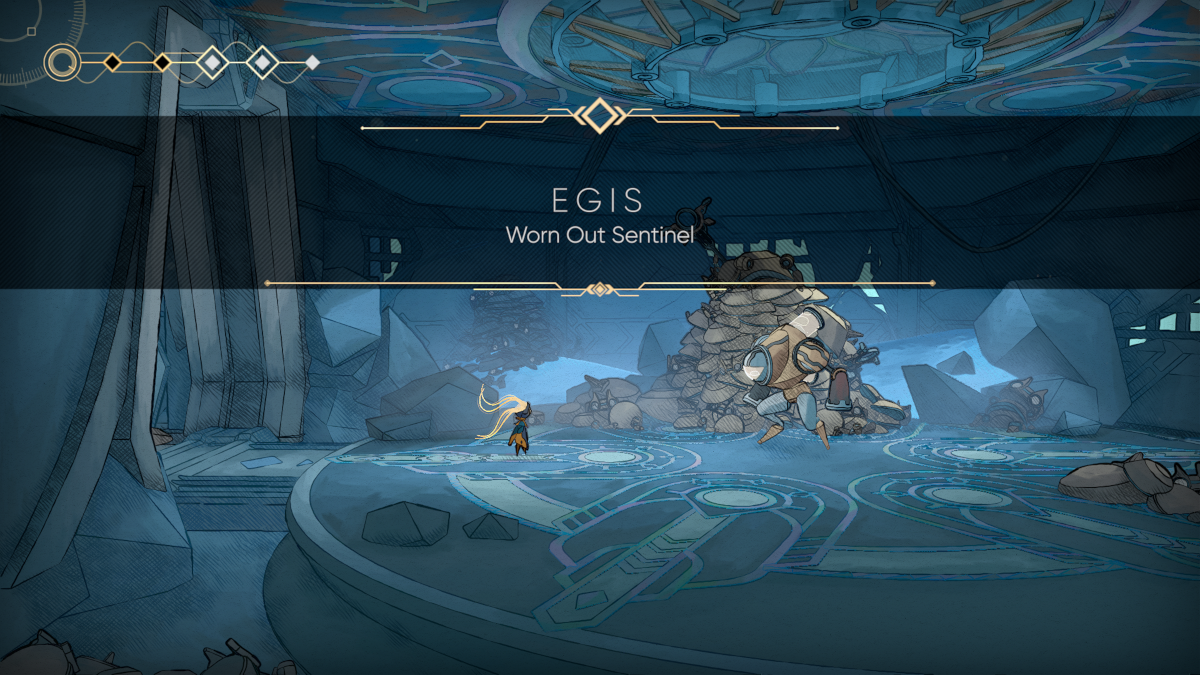
All in all, MIO: Memories in Orbit has made a positive first impression, and I do want to stick with it if only to “live” for a while in its strange and beautiful world. Perhaps as I upgrade Mio’s abilities and uncover more of The Vessel’s secrets, the journey will even out as a result. All games have their breaking-in period; I hope this one doesn’t break me earlier than expected.
All images, including lede, captured by author during Xbox gameplay of MIO: Memories in Orbit (© Douze Dixièmes).
 VIRTUAL BASTION