In my post about Keeper, I made mention of my 2026 resolution to play new games on Sundays. This intention actually goes back to last summer, when I resolved to start clearing out my backlog, at least a little. With a glut of too many games to play over the holidays, I returned to this intention, and kicking things off with Keeper really got the ball rolling. I’ve since finally begun Clair Obscur: Expedition 33, and I just ticked off another stunner from my PS Plus backlog – Viewfinder. Whatever comes next has some pretty large shoes to fill.
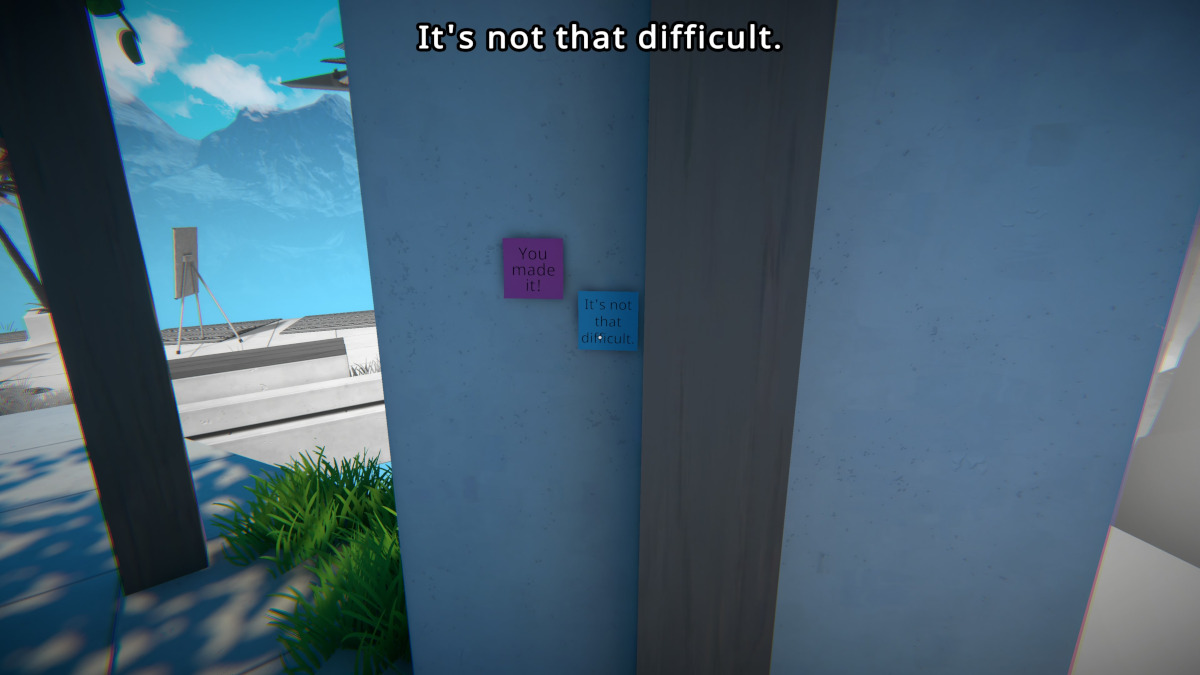
On the surface, Viewfinder is a game that’s all about perspective. You know those pieces of 3D art that appear to be a disparate collection of things until you view them from just the right angle? The game is like that, only so much more. Players take on the first-person role of a nameless participant in a simulation. The game has a story, one that runs surprisingly deep with scientists at odds as they attempt to conquer a seemingly impossible challenge. Other than “the participant,” there are only two other characters with whom to interact, one of which is the contact to the outside world, while the other helps the player make sense of evidence related to the impossible challenge that’s strewn throughout the simulation.
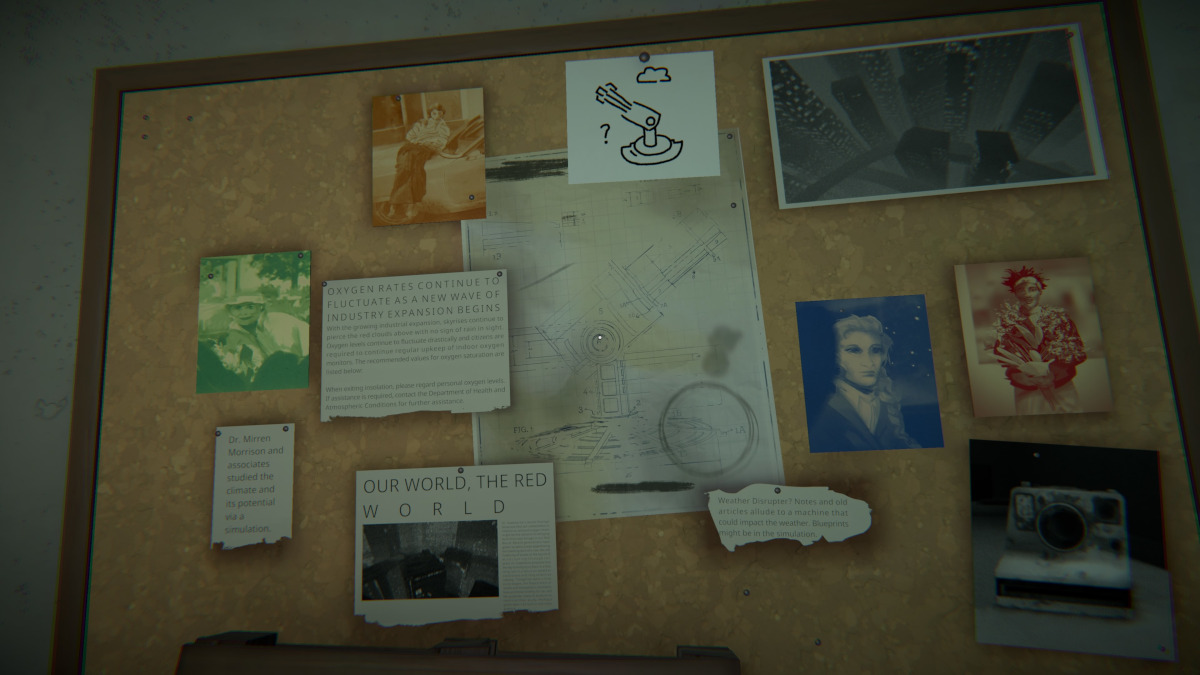
Putting together Viewfinder’s story pieces is just one puzzle within the grand scheme of things. The game takes place in five hubs, each with required and optional stages. Within each stage, players must traverse from point A to point B, manipulating “reality” in various ways in order to do so. Using pictures – photographs, etching, sketches, photocopies, and other mediums (some quite suprising!) — is a primary means. Players find, or in some cases take and/or make these 2D images and then place them in the world where they become 3D. Imagine walking into a painted landscape, a child’s crayon drawing, a black and white M. C. Escher print, or a photocopy of a photograph of a bridge, and you get the idea. Each stage is a puzzle, and each one appears with its own items. It’s up to the players as to how to best use the items at their disposal to solve each puzzle. If you get stuck, one hint is provided after a certain timeframe passes within each stage.
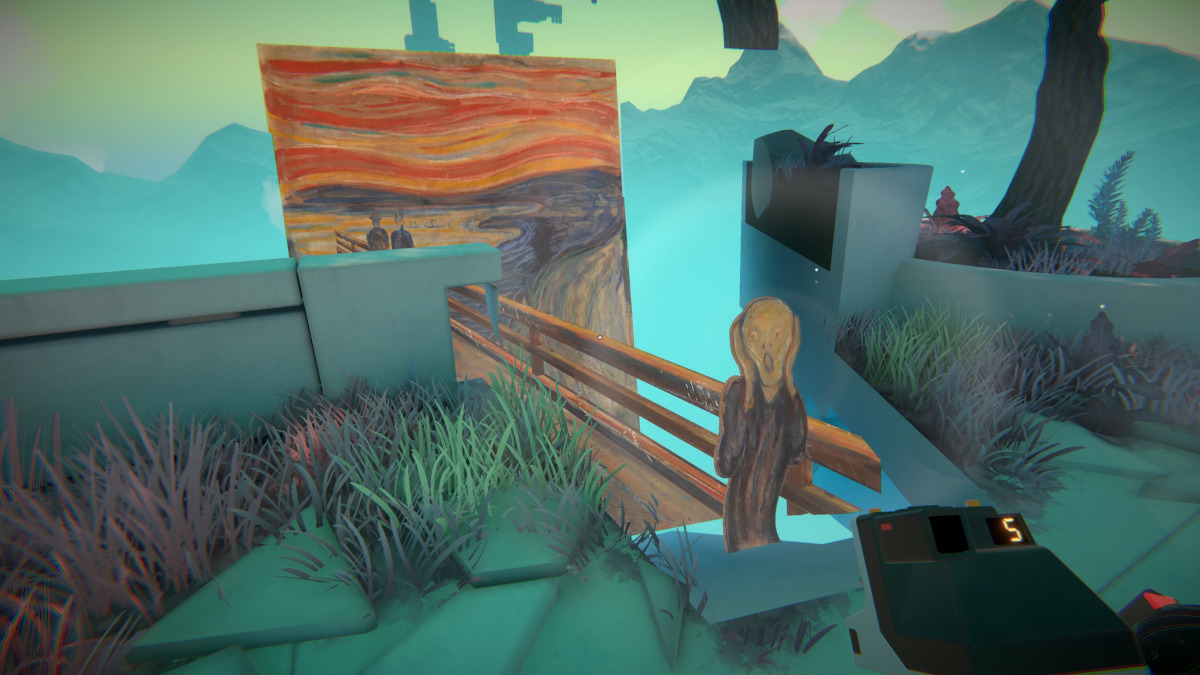
Viewfinder is a Unity game, so visually, it’s very clean and unfussy. (Its look and feel reminds me of The Stanley Parable: Ultra Deluxe.) The way players use images and items to physically change a stages landscape is sublime. Personally, I have depth perception issue in real life, so I was a little worried they’d transfer into the game, but that never happened. The first few puzzles had me a little out of sorts, but once I got the hang of the game’s mechanics, I became so completely enthralled with them that it was hard to stop playing! I finished the game in about a dozen hours, and the puzzles were so engaging, I could have gone from Viewfinder’s beginning to end a single day had my schedule allowed. Every time I mastered a new mechanic, I simply wanted more of it. I had no idea that mind-bending, reality-warping, perspective-shifting, topsy-turvy puzzle games could be so enjoyable until I played Viewfinder!
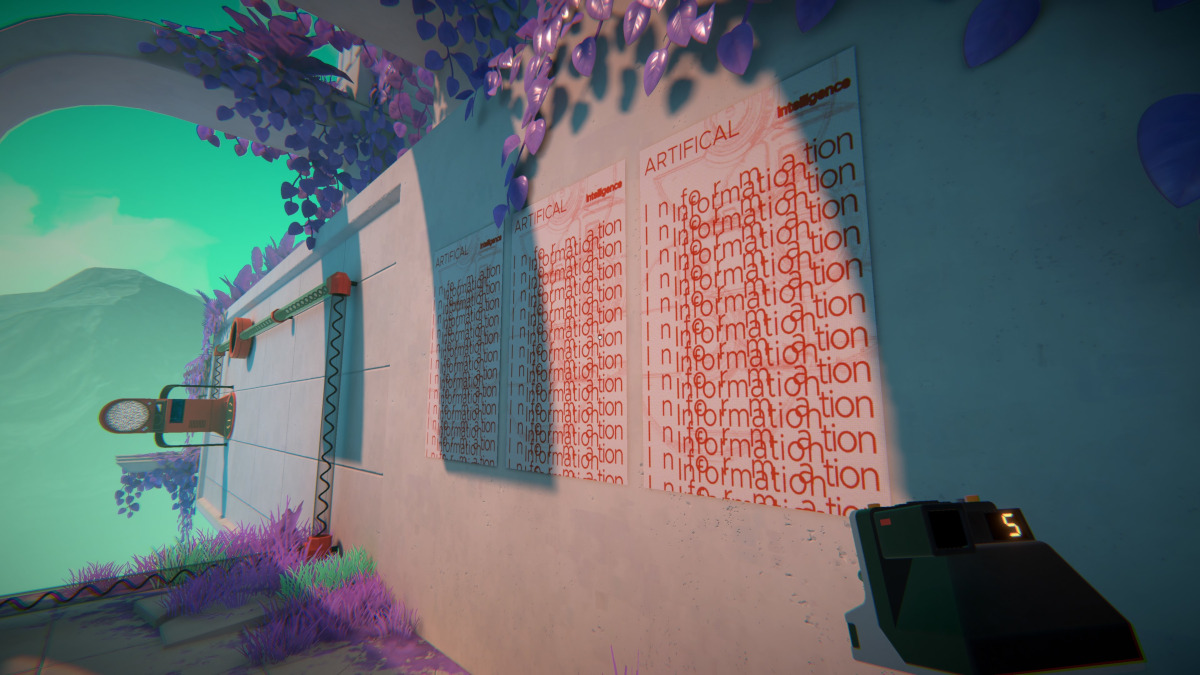
If you like puzzle games that challenge the concept of a “puzzle game,” provide provocative stories, allow you to mold space and meld realities, and truly keep you engaged and on your toes, then give Viewfinder a try. It might look simple on the surface, but beauty is only skin deep. It’s what lies beneath, behind, above, and below that sets Viewfinder apart from puzzle game pack.
All images, including lede, were capture by author during PS5 gameplay of Viewfinder (© Sad Owl Studios.)
 VIRTUAL BASTION