Upon starting South of Midnight, players are met with some cautionary words. First is that this might not be the game for you if you have a strong fear of spiders. It’s a fair warning, as both literal and figurative spiders, and the things that spiders do best, are strewn throughout the game. The second warning is more emotional, claiming that the game is about empathy and contains traumatic and distressing scenes. Certainly, it was not wrong; there were many more things than spiders in this game that instilled fear. In between the spiders and the drama, however, was a spellbinding and thoughtful story that was masterfully woven into the mesmerizing fabric of its surroundings. While South of Midnight receives a few demerits for its bland combat and weak ending, the game is a stunning tribute to determination, compassion, and endurance.

In South of Midnight, players take on the role of Hazel, a high school track star who lives in a steamy, melancholy bayou-like town called Prospero with her very busy social worker mother, Lacey. While headstrong and able, Hazel can’t help but feel alone and resentful, as Lacey seems to give more attention to the children under her care than her own. When a terrible storm hits the neighborhood, their home, raised on stilts, washes away in a huge flood with Lacey still in it. Hazel, who had been sent out by her mother to check on the neighbors before the storm hit in full, then sets off on a quest to find their home and rescue Lacey.

Hazel’s track skills come in quite handy as she adeptly runs and jumps over and around various obstacles while avoiding the hazardous flood waters. During her route, she begins see “strands,” ghostly paths that lead the way forward. Eventually, however, she loses sight of her home and must detour for help. Despite an early reveal of family estrangement, she ends up at her grandmother’s estate. Grandmother Bunny’s plantation home lies in stark contrast to Hazel and Lacey’s much more humble and now missing abode, and though Hazel tries, Bunny doesn’t seem at all interested in helping her find Lacey. In fact, Bunny hinders Hazel’s progress once she learns that Hazel can see strands. While escaping from Bunny’s estate, Hazel uncovers the secrets of the Weavers – magic-users who work to restore bonds and balance. Upon finding various Weavers’ tools, Hazel learns that she can manipulate the strands she sees to traverse and survive the world.
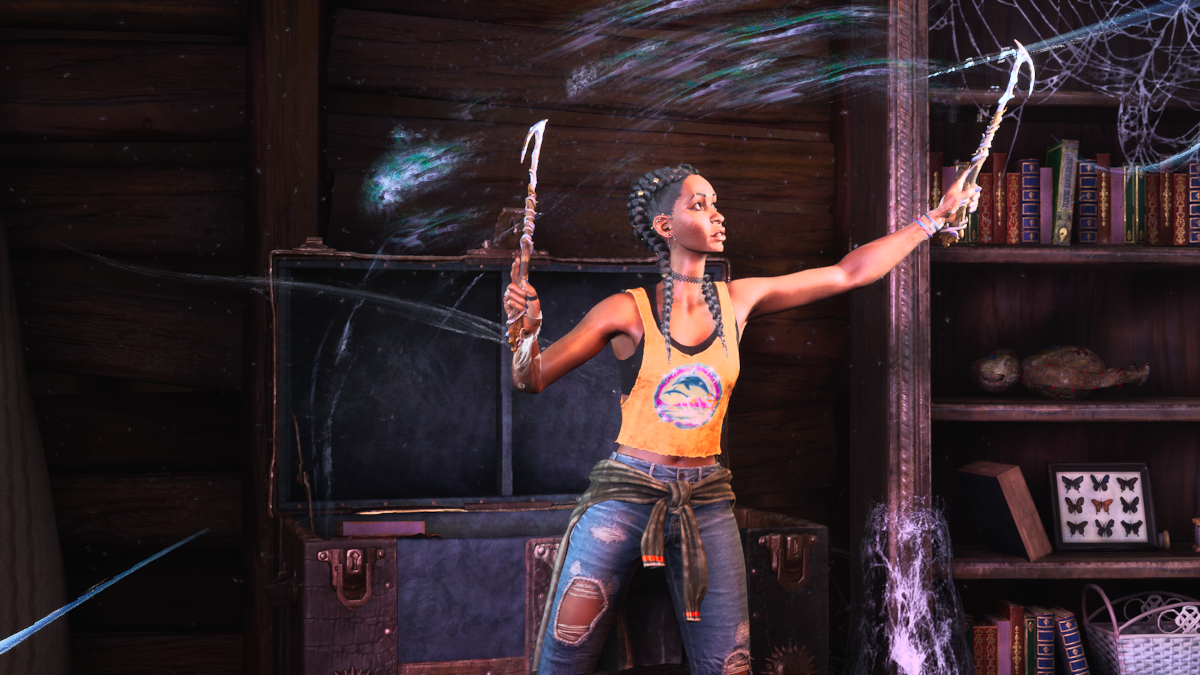
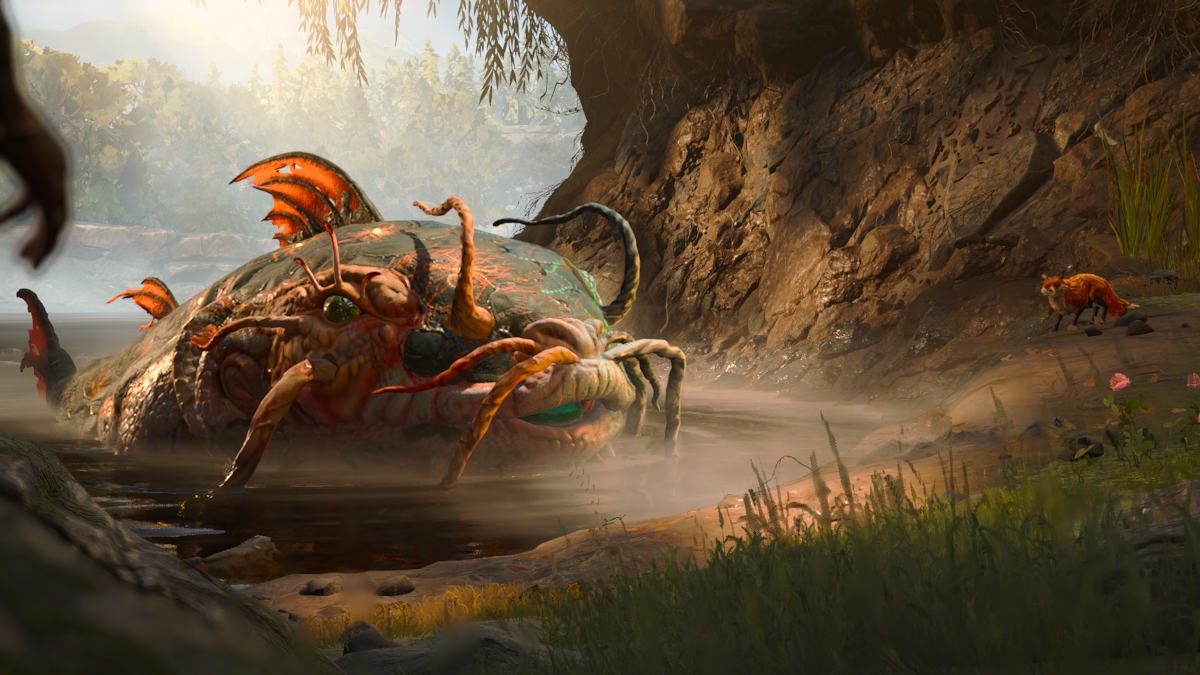
And what of Hazel’s world as a new Weaver? It’s transformed from the realities of a blue-collar town in a sleepy swamp to a veritable wonderland infused with riches and ruin. Think: Dorothy’s transition from Kansas to Oz (in the Wizard of Oz), only without a house falling on anyone and no good or bad witches to boot. Instead, the wonderland simply becomes the world as it is. And it isn’t all pretty. Massive, thorny vines engulf the landscape, and it’s smattered with evil spirits called “haints.” But Hazel seems unphased by it all, hardly even batting an eye with she meets Catfish, a very large and very vocal catfish who promises to help Hazel find her mother and teach her about the history and ways of the Weavers. As Hazel progresses, she works to untangle her family’s past, interacts with folklore brought to life, and fights for survival against the demons of apathy, ambivalence, and inconsequence. By puzzling back together her homelife and learning of the Weavers’ resilience during time of hardship and struggle, Hazel eventually takes her place as Prospero’s next guardian.
I can’t go into much more detail of South of Midnight’s story without spoiling it, but suffice to say, it was nothing I’ve ever experienced in a game before. Its boundaries were nicely formed by a combination of lore of the American Deep South, Lacey’s memories, and Hazel’s acceptance of her situation. It was within the tapestry of tying together all those threads that several loose ends that were left hanging, the ending being just one, unfortunately. Still, accompanying Hazel on her journey was a metaphysically wild and heartwarming ride, one that I would like to partake in again…
…without the combat.

If South of Midnight has but one weak spot, it’s the combat. It’s not that the game’s combat isn’t mechanically sound or doesn’t make sense within the context of the story; it’s simply monotonous and uninspired. Garnering various abilities for Hazel’s arsenal does nothing to make battles more enjoyable, more dynamic, or even more challenging. As the story advances, new enemy types are added, and they grow in number within each area that Hazel faces them, but they don’t “level up,” per se. Much to its credit, South of Midnight possesses excellent accessibility settings, which including turning off combat completely. In my next go-round in Prospero, that’s the route I’m taking, because…
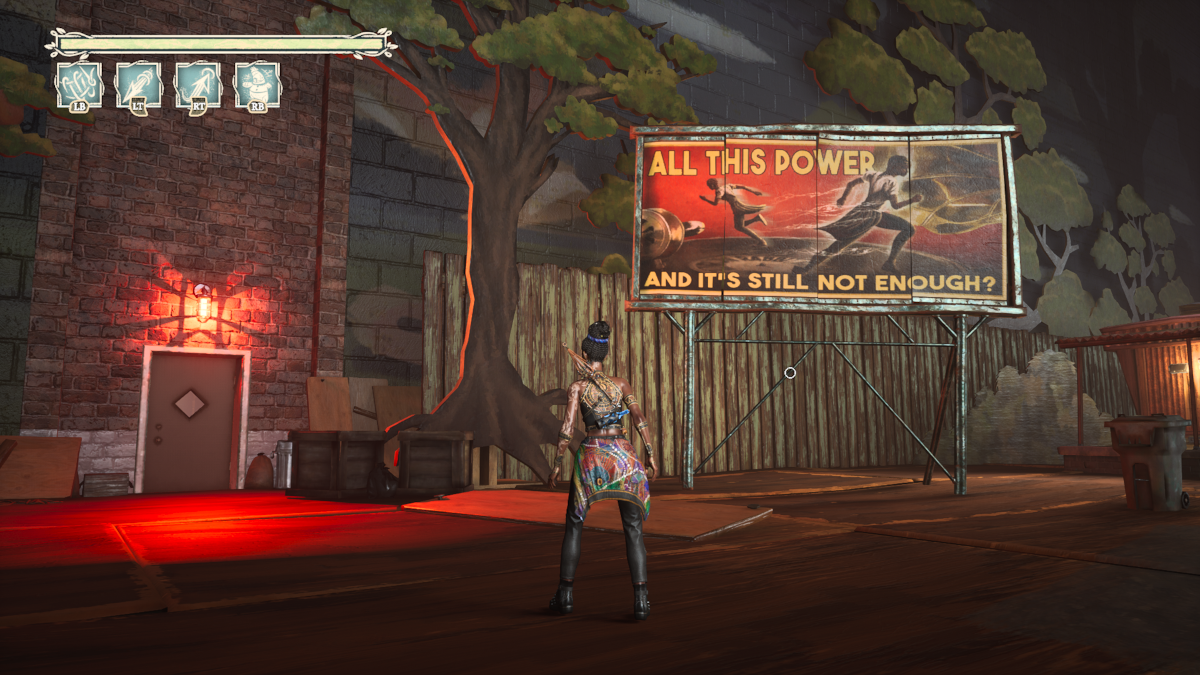
…everything else about the game is solid. Sure, I encountered a few glitches here and there, most of which involved Hazel getting stuck on the landscape in various ways, but the preciseness and variety of traversal methods at Hazel’s disposal, along with the game’s utterly gorgeous scenery and vivacious, compassionate story, made for an excellent time. I’ve seen comparisons made between South’s of Midnight’s mobility system and the likes of Uncharted or Assassin’s Creed; but in my mind, it was more akin to a tight platformer like Metroid Dread or Ori and the Blind Forest. (Of course, that may be the spikes talking!) Getting around in South of Midnight is the best thing about it, because there’s so much to see, learn, and overcome. Hazel’s wit and her unflappable bravery engage at every turn. It makes me want to succeed for her and her family, and for every Weaver, past and future. Despite its shortcoming, South of Midnight is packed with heart and soul.
All images, including lede, were captured by author during Xbox Series S gameplay of South of Midnight (© Compulsion Games).
 VIRTUAL BASTION