When Rebellion’s Atomfall was first announced in the summer of 2024, comparisons to the Fallout franchise popped up almost immediately. I’ll admit that the similar post-apocalyptic feel had me hooked enough to name Atomfall as one my most anticipated games of this year. The game was released in March and I downloaded it then, but a variety of distractions kept me away from it until recently. I had mild concerns over its billing as a survival game, a genre I’m fine but not great with, and I’ll admit that the comparisons to Fallout made me a little nervous that it was going to be some sort of terrible knock-off. In fact, Atomfall is its own game that takes place in a unique universe and fires on all cylinders. While it contains moments of clumsy execution, Atomfall is a very good time and is, very much, not Fallout.
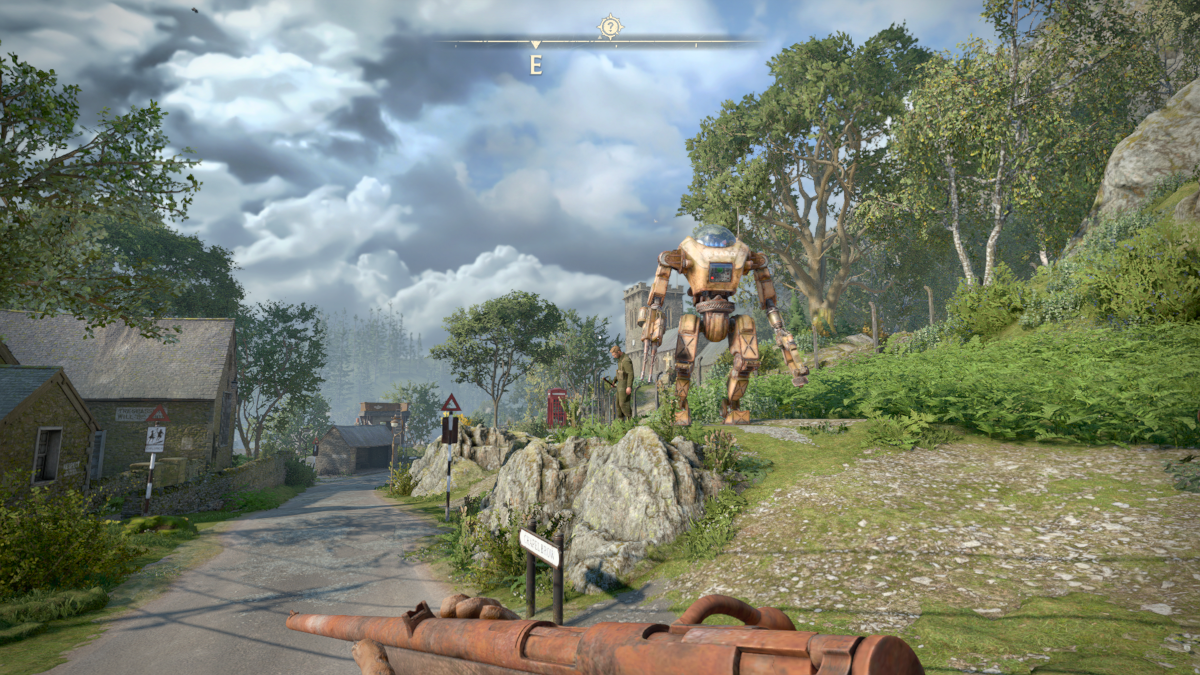
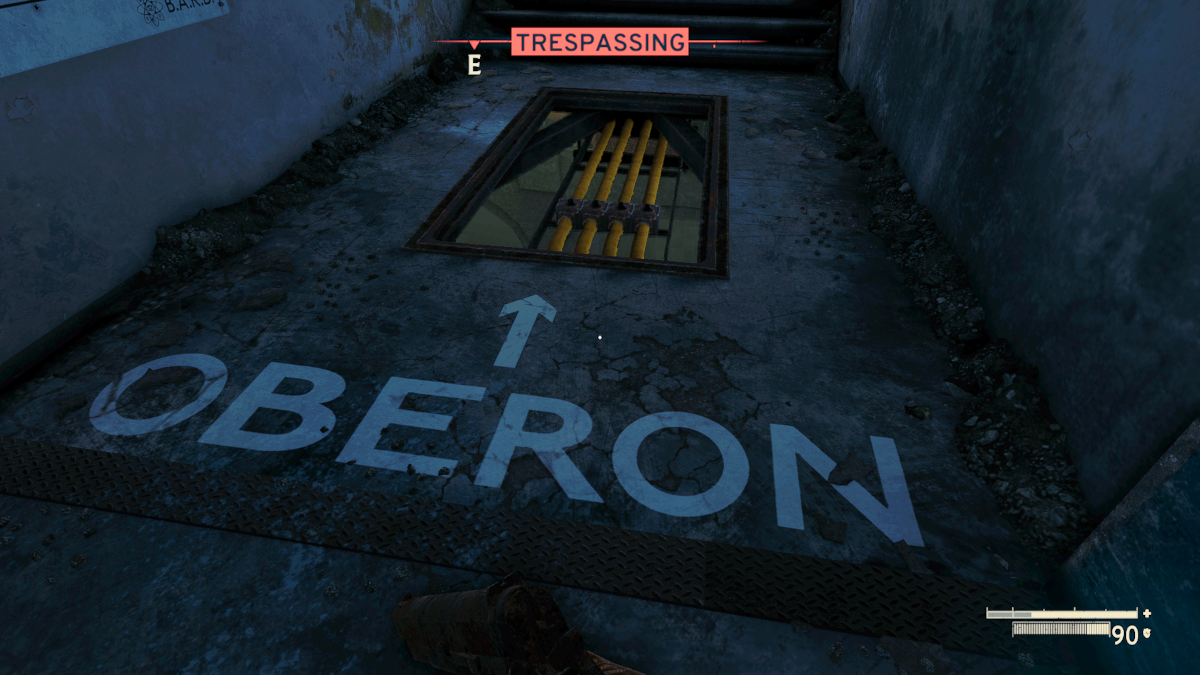
In Atomfall, players take on the first-person role of a survivor of a terrible event that occurred in mid-20th century Britain. They wake up in a random bunker, quickly learn how to utilize different items to stay alive, tackle a bit of sneaky combat, and enter a world ravaged by time and destruction. They immediately happen upon a phone booth in which the phone is ringing. Should they choose to answer, they’ll be met with a mysterious voice telling them “Oberon must die.” Who or what is “Oberon,” and why should they perish? So begins the mystery. Setting off further, players meet the folks who call the land home, both those who want to help, and those who want to hinder. All roads eventually lead to a vast and seemingly derelict underground hub that needs to be powered up. It’s up the player to figure out how to do that, exploring it and the surrounding, above-ground areas for resources, as well as clues about “Oberon.” The player meets several different individuals who claim to know how to best help them solve the “Oberon” problem and escape from the tragedy that ensued. Who will they choose to believe, and what will they ultimately choose to believe in?

Any comparison between Atomfall and Fallout end at “post-apocalyptic.” (Once I got into the game, it reminded me far more of the likes of Dishonored.) Atomfall is a first-person action-survival-resource management game. There’s nothing very RPG-y about it, save for, perhaps, a little bit of skill-building. Players are mostly presented with managing limitations. The players’ backpack can hold only twelve swappable items total, which includes weapons. Four of those slots are devoted to two-handed weapons – rifles, shotguns, bows, large axes, and the like – and the remaining eight are for small weapons, throwables, food, bandages, and “medicines.” There are three additional “special” item backpack slots that will fill up when players find said “special” items, and there are separate but also limited inventories for crafting materials and ammunition. Finding stuff to pick up and use isn’t a problem – the world is littered with everything players need to survive – and helpfully, there’s a “stash” system in place (though its access points are few and far between) that players can use to lighten their loads.
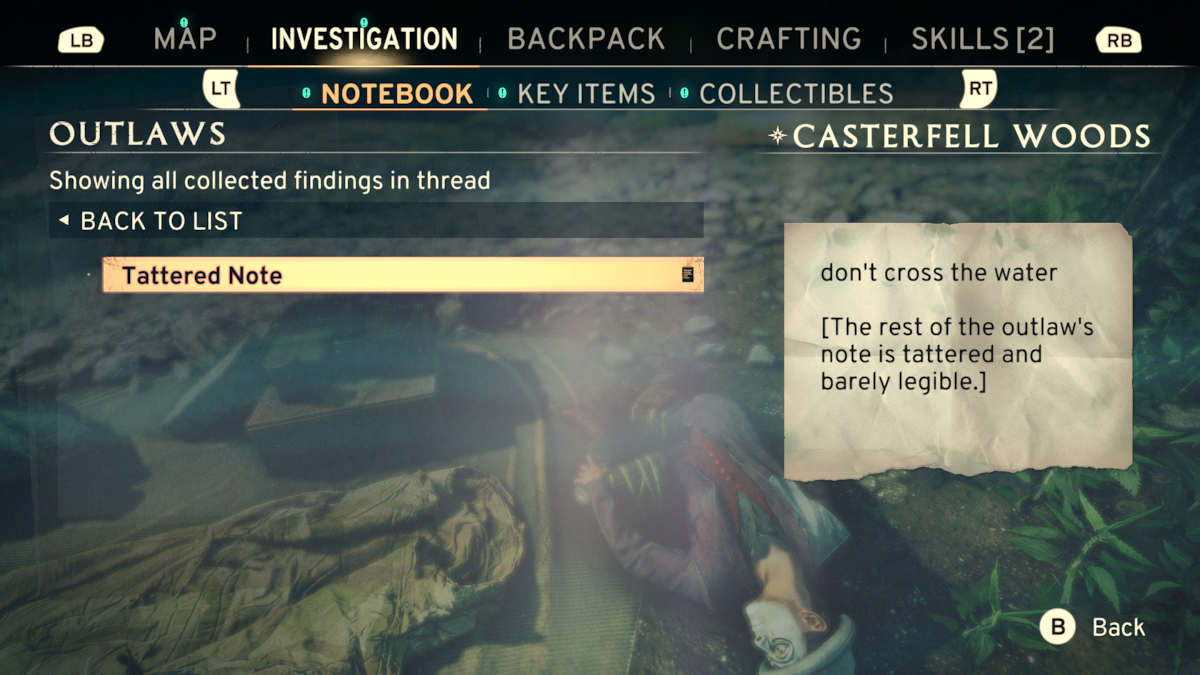
Atomfall’s northern England setting is spread out across four regions, all of which sit on top of the underground hub. Each is relatively small, though they contain various points of interest and offer some exploration. The main quest starts out linearly, but it soon branches out in several different directions, and it’s up to the player to choose what they want to do next. Upon traveling to any given region, the game notes how many quests or “leads” are currently available in that region for the player to follow. Occasional side quests pop up, too. They feed into the main story and lightly elaborate on the state of the world and its inhabitants. Atomfall isn’t a game where players spend time getting to know who’s who or making friends. They have but one goal: to escape. Each “way out” offers players different endings that play out in slideshows a la Fallout: New Vegas. At one point, I had six possibilities available; this was whittled down to four in the end. Though my characters’ escape route was altered each time, they all led to the same conclusion.

Atomfall might be one of the most satisfying games I’ve played in a long time. Its best feature is its brevity. This is not a meandering, 100+ hour exercise in the politics of complexity. The game drops players into mystery that’s intriguing from the start and reaches a decisive conclusion in a handful of hours. Players travel through gorgeous environments ranging from lush and serene to claustrophobic and deadly. The choice to engage in combat or not is completely at players’ whims, too. The fact that most enemies opt to disengage from battle first is such a welcome relief from having to shoot all the things all the time. Survival is manageable rather than oppressive. A wide suite of accessibility options offer players the ability to customize gameplay to their individual needs. My only personal knock against the game is that it lacks fast travel. Other than that, I heartily recommend Atomfall as a solid, action-driven experience that offers room to breathe, room to explore, and room to play however one wants.
All images, including lede, were captured by author during XSS gameplay of Atomfall (©Rebellion).
 VIRTUAL BASTION