At long last, Apollo Justice’s story has come to an end! More than a year after I began the Apollo Justice: Ace Attorney Trilogy, I’ve finally seen the trilogy through to the end of its third game, Phoenix Wright: Ace Attorney – Spirit of Justice. And my oh my, what a whirlwind tour of a game it was. Not only did it finalize the Apollo’s own tale of self-discovery, but also it closed storylines for all the members of the Wright Anything Agency, including Phoenix Wright, himself. It melded past events, and characters, with the present in mostly delightful ways; and it was not without plenty of twists and turns to keep players on their toes. Though logic leaps continued to require some stretching of the imagination, and the game dragged a little with its middle cases, the overall experience was memorable and touching. Here’s the rundown of my Spirit of Justice experience.

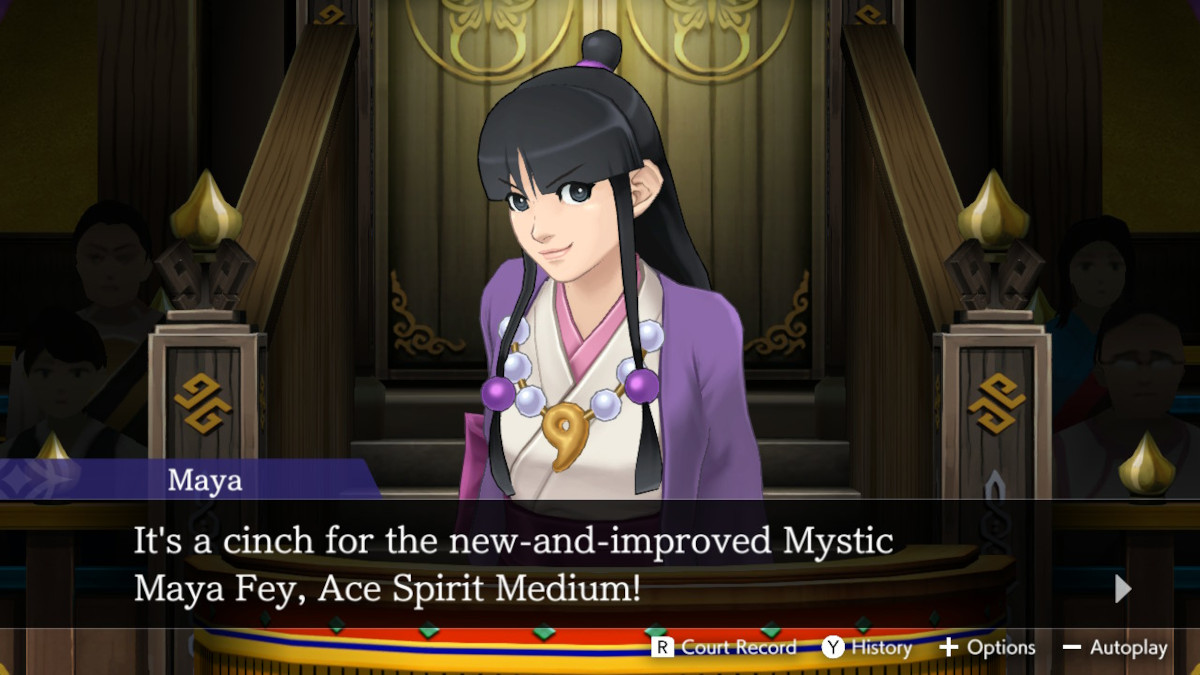
Spirit of Justice’s first case, the Foreign Turnabout, opened with Phoenix Wright having just arrived in the Kingdom of Khura’in. He’s there to visit his old friend and former assistant Maya Fey, who’s undertaking rigorous spirit medium training. Before he gets a chance to see her, however, he become caught up in case involved a young boy who’s accused of stealing a sacred artifact from a temple. Wright quickly finds out that there’s no love loss for lawyers in the deeply spiritual and religious kingdom. In fact, they are so heavily despised that if they cannot prove their clients’ innocence, they will suffer the consequences of the judge’s wrath along with their client. Naturally, this led to the kingdom becoming a land without lawyers in a legal system dominated by prosecutors and, with the help of the kingdom’s duty-bound princess, Rayfa Padma Khura’in, divination séances that allow one to see a deceased’s final moment.
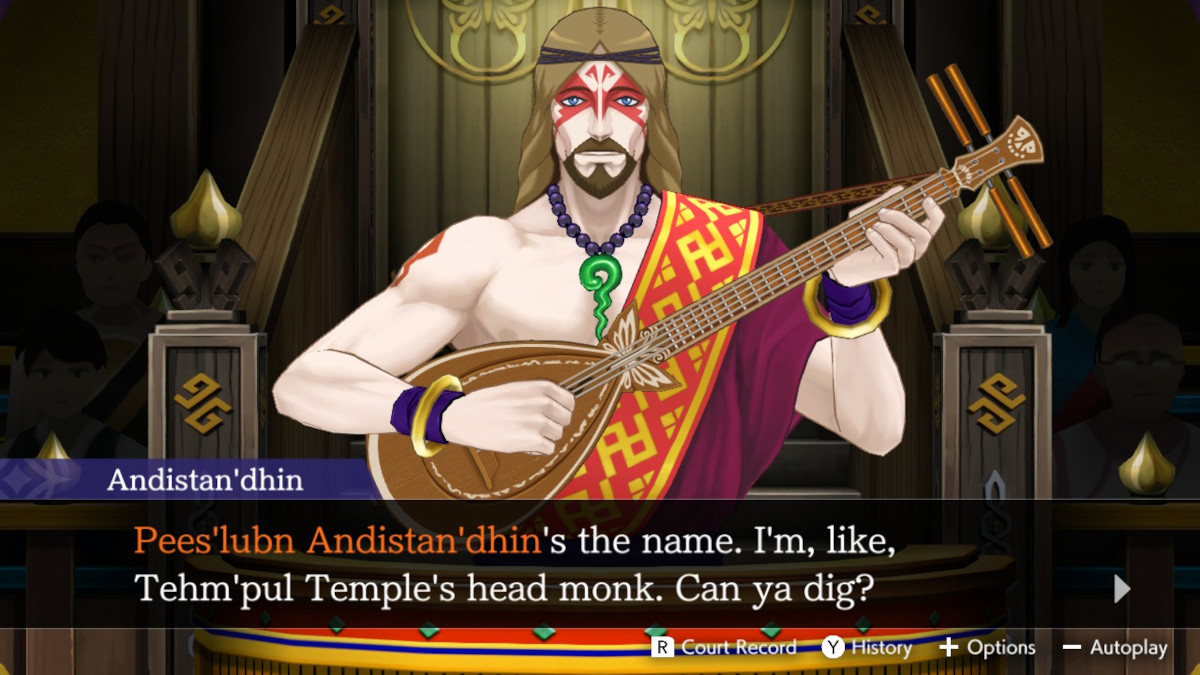
If there’s one thread that ties together all of the cases in Spirit of Justice, it’s that the world needs lawyers. The importance of defending clients and believing in them until the “bitter end” rests at the core of each case, and each bring players to the brink of failure before wrestling victory from seemingly nothing. If this coherence lain with the game’s other two titles, well, I was too dense to realize it. It’s stunningly clear in Spirit of Justice, which certainly helped the game feel more like full story rather than an anthology of sorts.

I should point out here that the game possesses another thread, one just as strong – that of new character, internationally-renowned prosecutor Nayuta Sahdmadhi. He’s prevalent throughout the game as the main “villain,” and his own turnabout is as notable as that of Apollo’s.
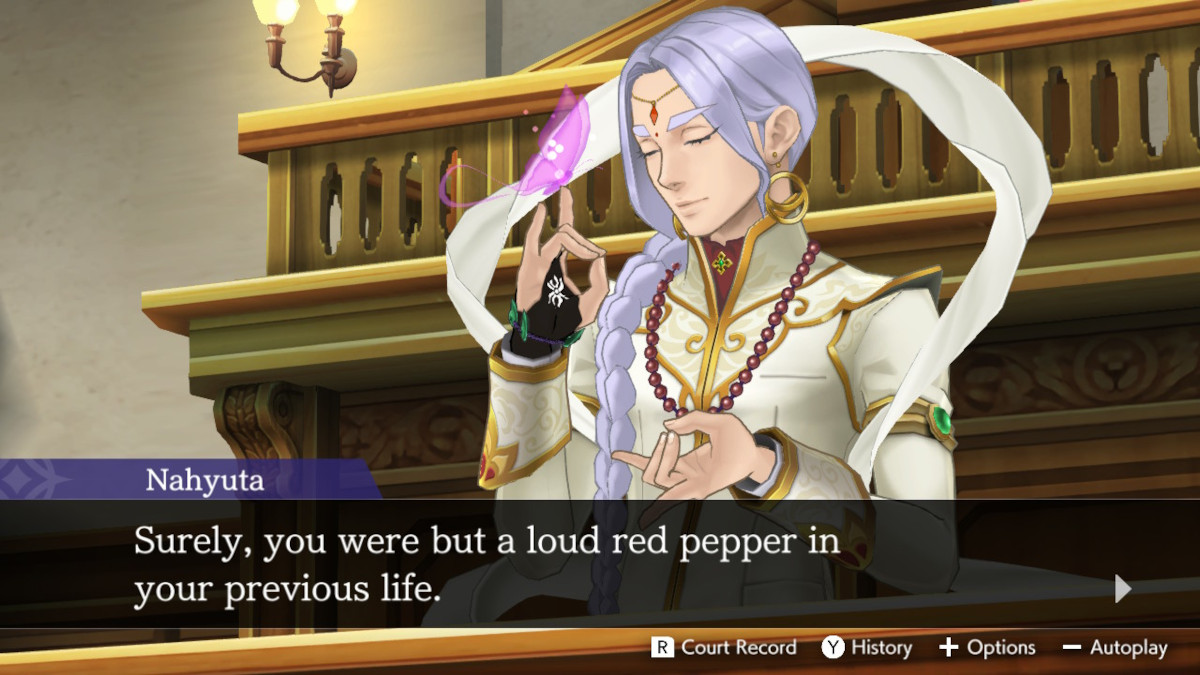
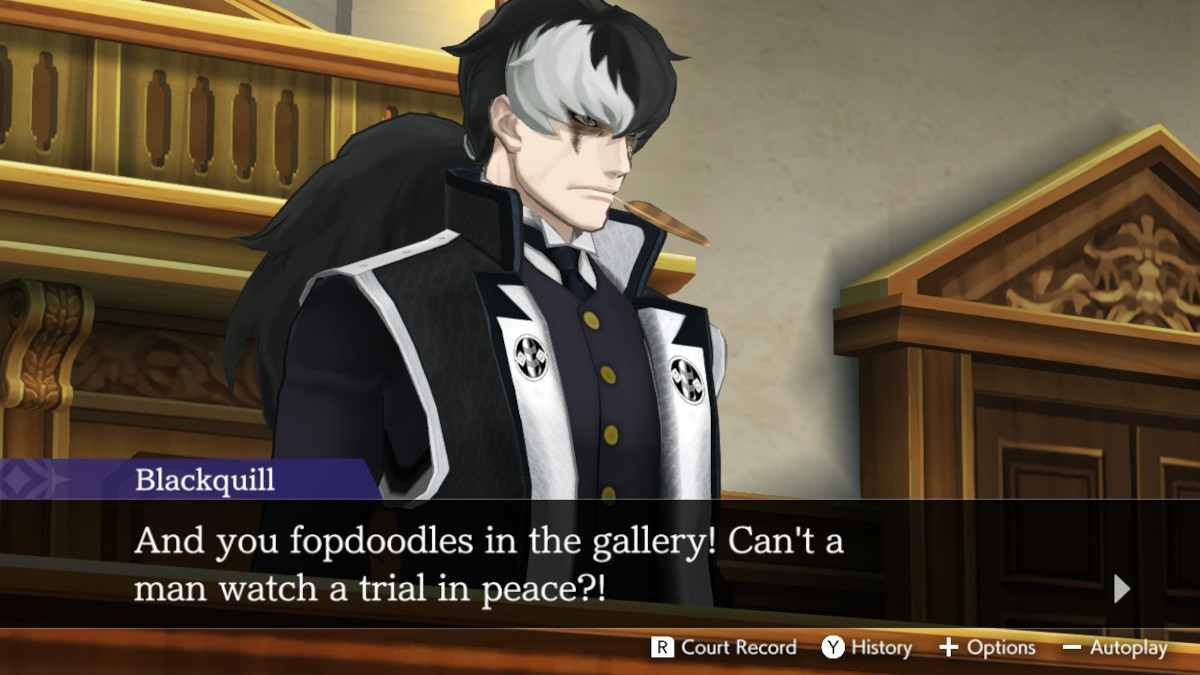
After Wright wins the Foreign Turnabout, the cases switch back and forth between domestic cases and those in that are mostly based in Khura’in. The second and fourth cases – the Magical Turnabout and the Turnabout Storyteller – focus on Trucy Wright (Phoenix’s magician daughter) and Athena Cykes, respectively, and each adds quite a bit of dimension to these characters. In the Magical Turnabout, players get to see Trucy’s magic in action. When she’s accused of murder, Apollo and Athena come together to defend her, and their relationship deepens as a result. The Turnabout Storyteller brings together the unlikely defense team of Athena and (prosecutor) Simon Blackquill as they seek to clear the name of one slightly sloshy noodle genius. Watching Athena and Simon trade barbs is delightful. While players witness Athena’s growth, they also get to see another side of Simon after his dark, broody, and aggressive turn in the previous game, Dual Destines.
The other two Khura’in-based cases, the Rite of Turnabout and Turnabout Revolution, bring closure to the arcs of Maya Fey and Apollo Justice. After being accused of a priest’s murder, Maya realizes her full potential as a spirit medium in the Rite of Turnabout. Phoenix serves as her lawyer, and the case quite literally turns Khura’in’s “sense” of justice on its ear. Its entire system, from the rightfulness of Rayfa’s séances to the godlike status of prosecutors, is called into question. When Wright succeeds, it feels like the whole kingdom is shaken to its core. Which makes some sense once the Turnabout Revolution begins. From Wright’s first footsteps in Khura’in, it’s established that the kingdom is on the brink of revolt. In this final case, Apollo Justice takes center stage and ends up on a roller coaster is emotional, mental, and physical distress. Players learn about his past, his deep connection not only to Khura’in but also to its current state of affairs, and they see him grow in remarkable ways, especially when considering Apollo’s greenhorn status in Apollo Justice: Ace Attorney. Apollo’s “final form” is a joyous transformation, one that serves as a perfect ending for him, and even for the Wright Anything Agency, which is forever changed by his actions.
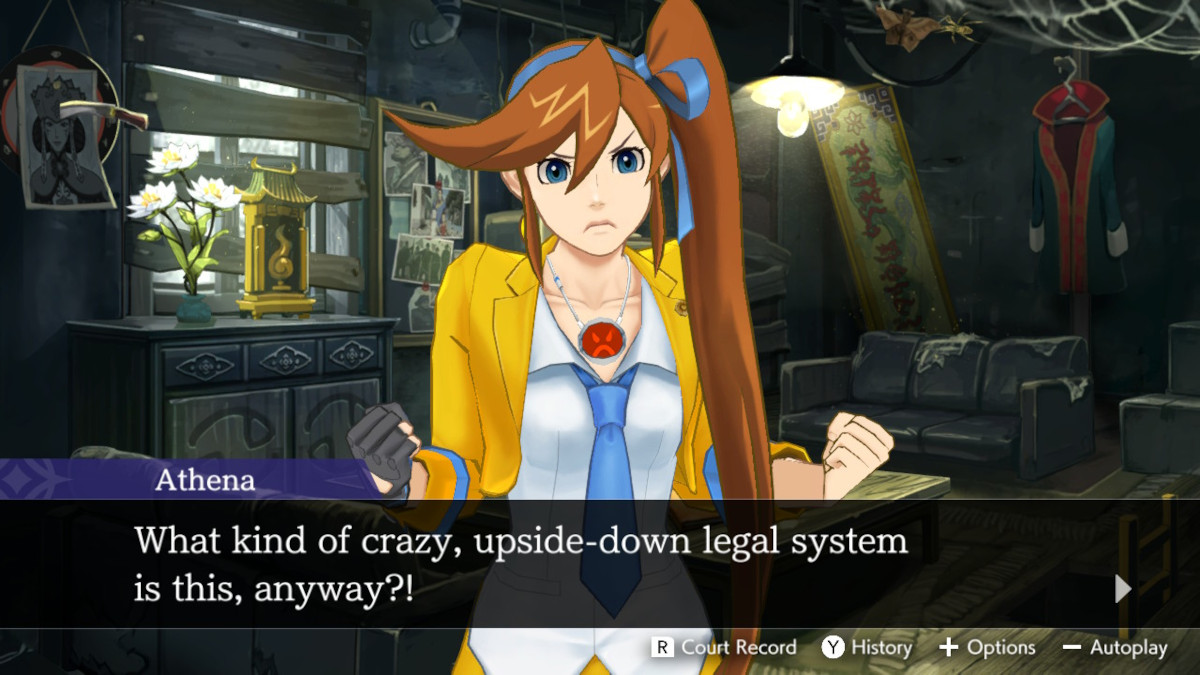
Though I heartily enjoyed playing Spirit of Justice overall, its individual cases were a mixed bag. The third case, Rite of Turnabout, felt especially slow and meandered a little too much before reaching its conclusion. In hindsight, that meandering did set up the events the Turnabout Revolution, but my goodness if I didn’t think the case was even going to end. Turnabout Revolution itself was an especially long-winded romp from here to there and back again. It’s ending served well as redemption, but honestly, the first third of the case was so convoluted, I nearly stopped paying attention to what was going on. I’m sure that me playing the game in short bursts didn’t help – it’s hard to make much progress twenty minutes at a time. As I neared the end of the last case, I was especially driven to see it through, if only because I was ever so curious as to what would happen to and for Apollo.

Any game has its hills and valleys; those in Phoenix Wright: Ace Attorney – Spirit of Justice varied greatly in depth and breadth. However, the journey was worth it. Needing a break from so much lawyering, I didn’t play the game’s DLC case, which I’m sure will call to me someday. In the meantime, I’m glad to call Apollo Justice: Ace Attorney Trilogy done. Was it as good as the first trilogy of Phoenix Wright games? Its cases and characters were deeper and more complex, but I think I’ll always be a little more on the side of team Phoenix and Maya.
All images, including lede, were captured by author during Nintendo Switch gameplay of Apollo Justice: Ace Attorney Trilogy (© Nintendo).
 VIRTUAL BASTION