Or…at least that’s what Bethesda would like players to think. But I shouldn’t get head of myself in formulating my thoughts on Starfield after finally completing its main story. Doing so didn’t take me nearly as long as it did with, say, Fallout 4, but the process felt much more arduous. In just a matter of weeks after the game’s initial launch, I tuned it out due to boredom. Several months and updates later, I returned to the game with a renewed outlook, and things were better, and yet, I eventually tuned it out for a second time. The issue then was less about boredom and more about the irregular pacing within quests. Enter in a new year and me having some extra time while waiting for new games to drop (ahem Avowed ahem), and I return to Starfield for a third time with the singular goal of finishing just the main quest.
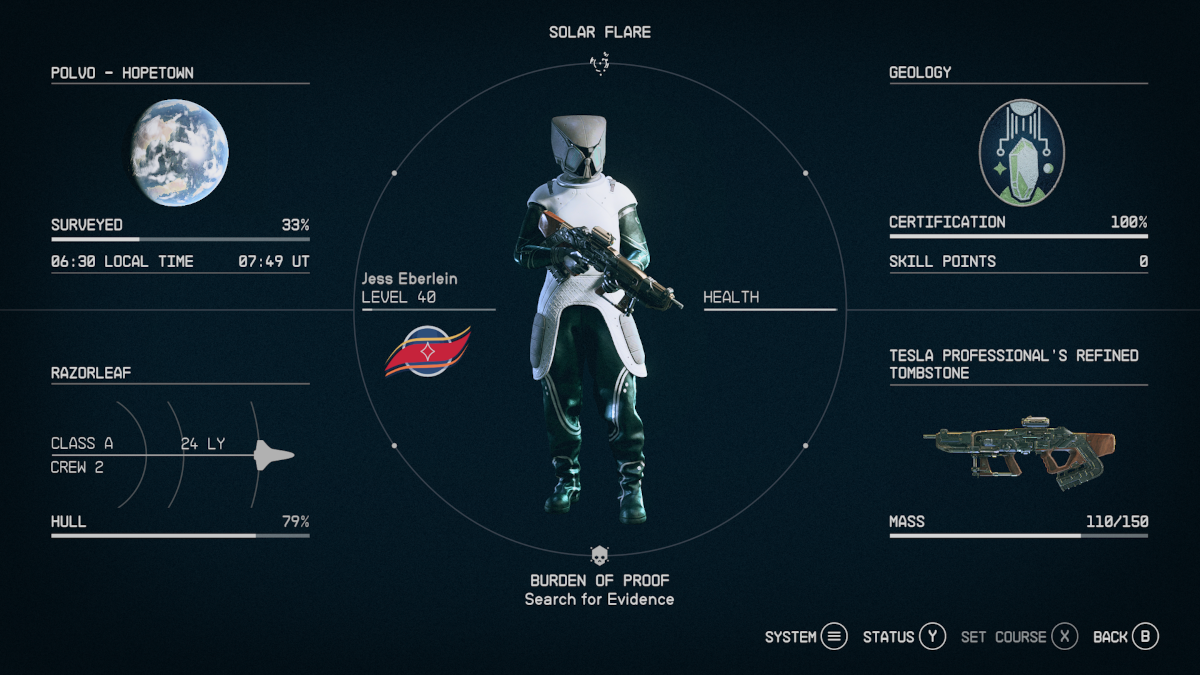
Needless to say, spoilers lie ahead. But, speaking of which, I accidentally ended up lightly spoiling Starfield’s ending myself not all too long after the game release. I caught a stray statement somewhere on social media that claimed the game “opens up” upon reaching New Game Plus. Okay, so that didn’t spoil the game’s ending per se, but I didn’t know it had NG+, for one. I was also immensely curious about the whole opening-up thing, which might be the only reason I didn’t let Starfield linger on unfinished for years. During my fits and spurts, I kept saying to myself “finish the game, finish the game, just finish the game!” figuring that some grand fate awaited in NG+. TL;DR the end of Starfield was unremarkable, but what happened next was…interesting.
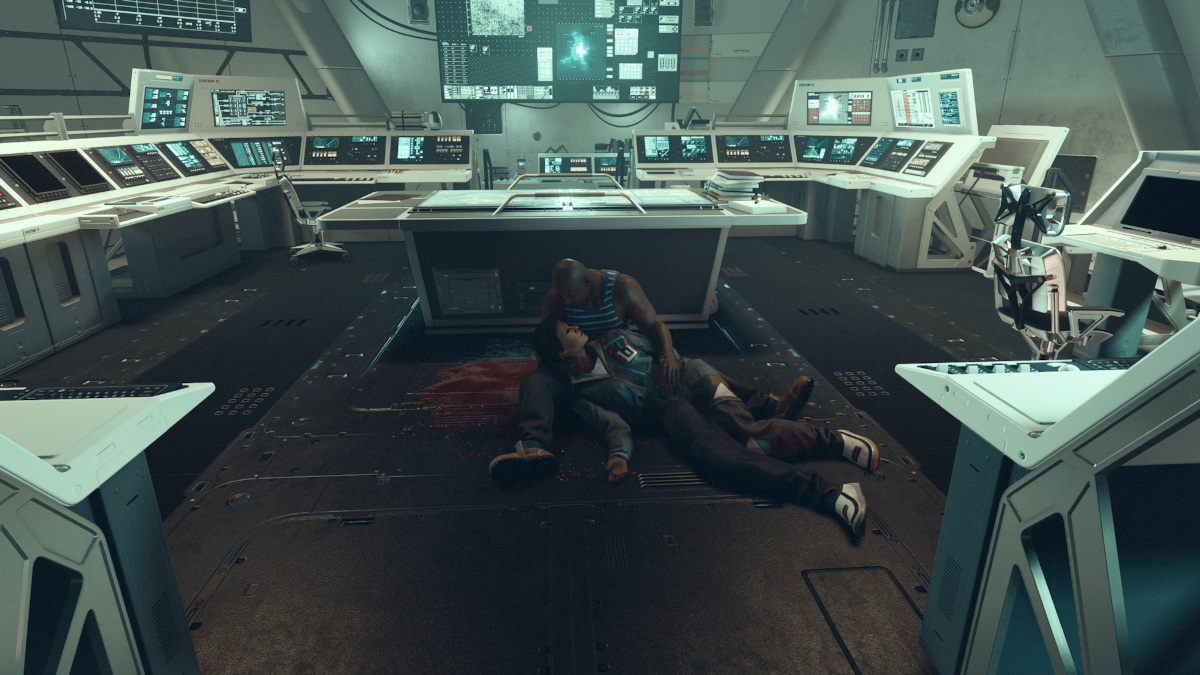
In Starfield, players take on the role of a member of a space-faring group called Constellation after they, working initially as a miner, unearth a mysterious artifact. Constellation seeks to find similar artifacts while also discovering their meaning. As players hunt for more artifacts, they befriend Constellation members, learn about (and help or hinder) the galaxy’s many factions, cross paths with space pirates, and meet the mysterious Starborn, who are also searching for the same Artifacts. In the end, bringing the artifacts together allows players to access a convergence called the Unity. Upon reaching the Unity, players come face-to-face with their own characters and learn that the Unity leads to parallel universes. Should they enter the convergence, they will become Starborn and begin “anew” in another universe. If they choose to leave the Unity, they’ll return to the world they know.

That’s how it sounded anyway. My newly-minted Captain Jess went for the Starborn option, because it sounded too intriguing to pass up. Into the Unity we went, some magical moving through time and space ensued, the credit rolled, and then back to the game, NG+ to be exact, we went. Only this time, Jess had nothing except her memories, XP levels, and a fancy Starborn ship and outfit to match. Gone were all her possession, credits, and quest lines. Only one mission popped up to visit Constellation’s home, The Lodge. So, that’s where she headed.
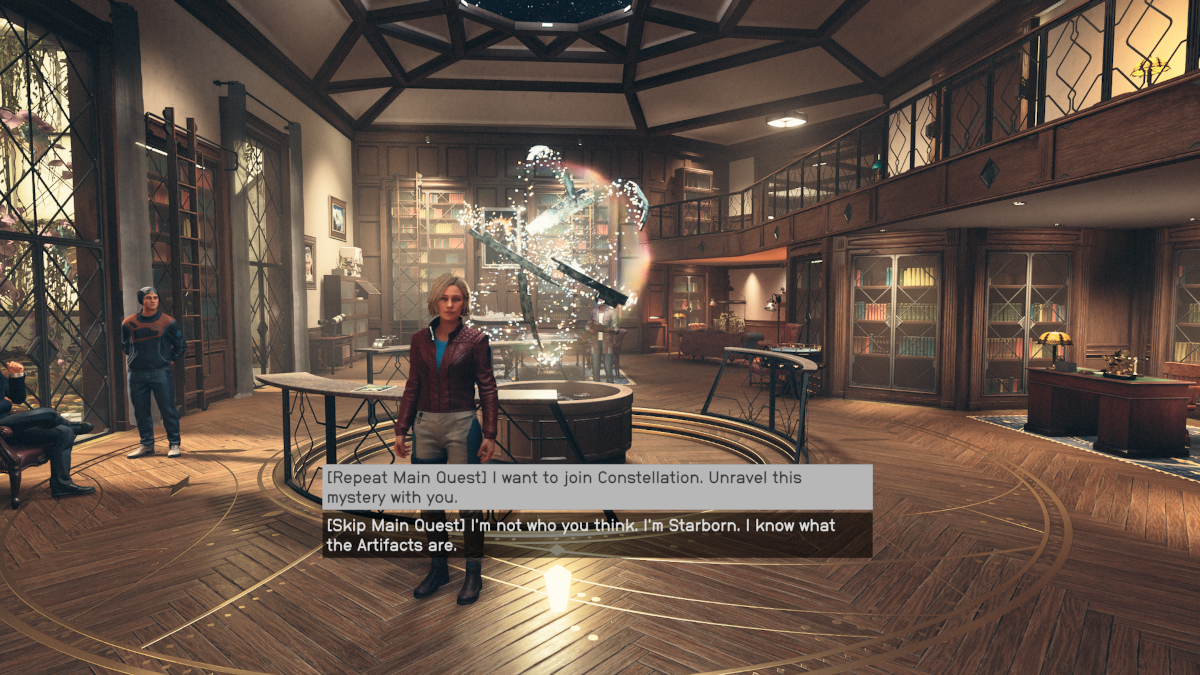
At The Lodge, Jess met a few team members again, for the first time, and spoke to its “face” and former companion, Sarah Morgan. We discussed the whole parallel universe thing, and how Jess was not the “Jess” they knew, and yet she still remembered them and all that had happened. From that conversation, another choice ensued: play through the main story again, or not? I decided to skip it and resume exploring Starfield’s 1,000 planets, or some such.

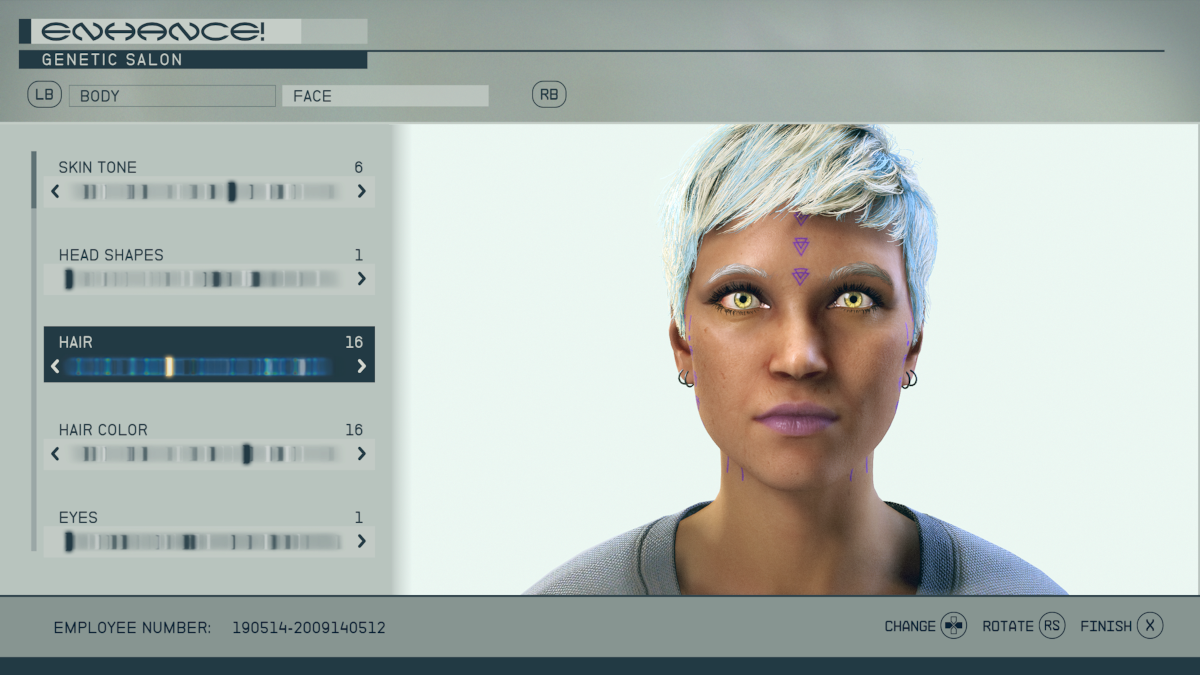
This brings me back to that initial spoiler I learned of how the game “opens up” upon completing the game; and yes, I get it now. And looking into it further, it seems that there are loads of parallel universes one can stumble upon through the Unity. That said, it seems that only Constellation and its team members may change in any given new universe; everything outside of it remains the same. Or, at least that’s what I’m seeing in my first New Game Plus run. I’m starting to gather up familiar missions, and the only difference now is that I’ll be tackling them (if I want to do them at all) at a higher skill level, with more abilities at-hand. Only Constellation members recognize my character as Starborn, and that’s only because they were told so. Even though I altered her appearance in imagining that her trip through the Unity changed her physiology, she’s still Jess, a traveler who’s traveling, helping people in need and maybe causing a little chaos along the way. Bethesda’s choice to turn the traditional approach to NG+ on its ear was refreshing, even if the results weren’t outwardly spectacular. I do really like the Starborn ship, if nothing else.
In culling my thoughts on reviewing Starfield, what occurred to me most strongly is that, unfortunately, there’s not a lot to say about it that hasn’t been said about most titles in its Fallout and Elder Scrolls series. The main story is only okay; side and miscellaneous quests are much more engaging. Environmental storytelling, though hampered by procedural generation, persists; and when it does enter in, it’s still often better than any person-to-person dialogue. Combat is fine and imbalanced. Navigating works when it works and is frustrating when it doesn’t. And typical Bethesda glitches abound…though it’s possible they are at their most abundant in Starfield. The game looks beautiful and boundless from center stage, but it rough edges appear once you pull back the curtain. Bottom line is that it’s a imperfect but enjoyable game if Bethesda’s take on a space adventure is your kind of thing.
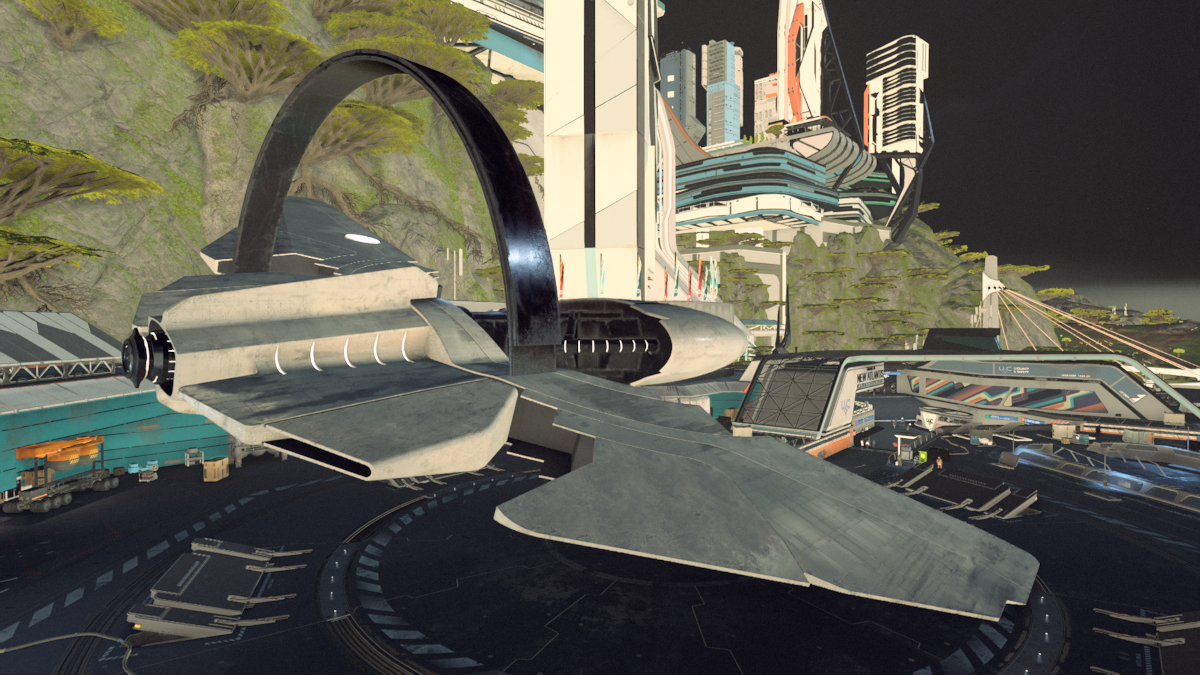
All images, including lede, were captured by author during Xbox Series S gameplay of Starfield (© Bethesda Game Studios).
 VIRTUAL BASTION
One Comment
Comments are closed.