When I first played The Stanley Parable years ago, the experience left me with mixed feelings. On one hand, I loved it for being so very clever about the illusion of choice in games. On the other, I hated it for being so very cheeky about the illusion of choice in games. At the time of its release in 2013, the industry was in the middle of a Pangea-like rupture that’s since played out to produce several gaming “continents” – AAA, AA, independent, personal, political, moral, immoral, VR/MR/AR, and so on. One prevailing topic then was all about choice in game, which had developers of huge, choice-laden games touting the players’ influence over the outcome of its story. It sounds great in principle; in practice, choice in games boils down to choosing pathways to certain outcomes rather than choosing the outcomes themselves.
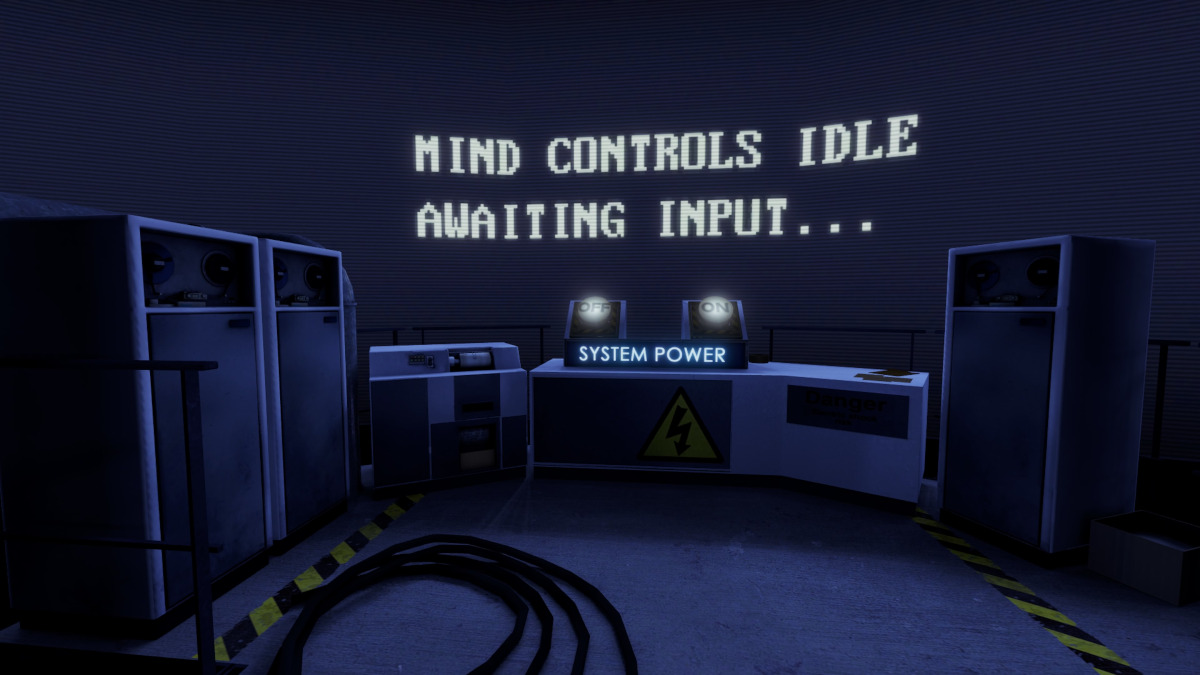
Players know this. I know this. And that’s why The Stanley Parable originally struck a nerve in its incessant chattering about how silly it is to believe that I, playing as an office worker named Stanley, had any actual bearing on the game’s story. All was doing was navigating Stanley through a series of choices. Some choices led to different outcomes, some choices led to the same outcomes. And that was that – hardy har har. Choice is futile, and I’m dumb for thinking otherwise.

Well, would things be any different in the game’s “new” and expanded “Ultra Deluxe” version? Spoilers (now and ahead): not really. But the game’s new content is decently humorous, to the point of bordering on farce. And I do enjoy a good farce.

In order to access extra content in The Stanley Parable: Ultra Deluxe (2022), one must first complete The Stanley Parable. Helpfully, there’s no need to go out and get the original game, as Ultra Deluxe has it all ready to go first thing whether you’ve played through it or not. You are Stanley, office worker #427 with a monotonous job of pressing buttons according the certain prompts. One day, the prompts stop, which eventually makes Stanley leave of his office to find out what’s going on. Looking outside the office, he finds that all of his co-workers are missing, and so he travels onward to find them. At his “side” is an omnipotent narrator who “guides” Stanley through the hallways to a point where he has to make a choice between two doors. The narrator “tells” him to take the left one, but the right one is open, too. What is Stanley to do?? The choice, or rather the path, is up to you. As one continues through The Stanley Parable, things get weird or intense or more informative or more serene as different endings are reached. But, no matter what choices are made, the game eventually resets and places Stanley back in his office.

So, what of the Ultra Deluxe-ness that awaits in The Stanley Parable: Ultra Deluxe? It opens up eventually. I did not keep track of how many original endings I had to play through before a literal “New Content” door appeared early in the game, but that particular entryway did appear. Taking it wasn’t quite like a can of worms…it was more like a can of gelled cranberry sauce. Y’know, the jiggly kind that retains the shape of the can when it’s plopped onto a plate? Yeah, The Stanley Parable: Ultra Deluxe is kind of like that.

For one, The Stanley Parable: Ultra Deluxe add several other endings into the mix. But, more to “The Stanley Parable” point, it questions everything from game mechanics to game sequels. It’s treatise on the latter is fairly on-point in a grand presentation of “The Stanley Parable 2,” which is essentially the same game slickly marketed with a few new additions – like a jump button and, uh, an emotional support bucket? – to make the sequel feel just “new” enough. The new content also calls out the ridiculous nature of reality in games, and that there is no such thing ultimately. This plays out in a brilliantly satirical ending that’s reached by pushing a single button until an interpretation of the end of time. And speaking of time, coming back to the game for multiple sessions introduces a few amusing if gimmicky prologues about time and settings. They are a little hard to explain, but were a treat to experience. If you choose to play The Stanley Parable: Ultra Deluxe, I’d definitely recommend playing multiple sessions with a day or two in between each.
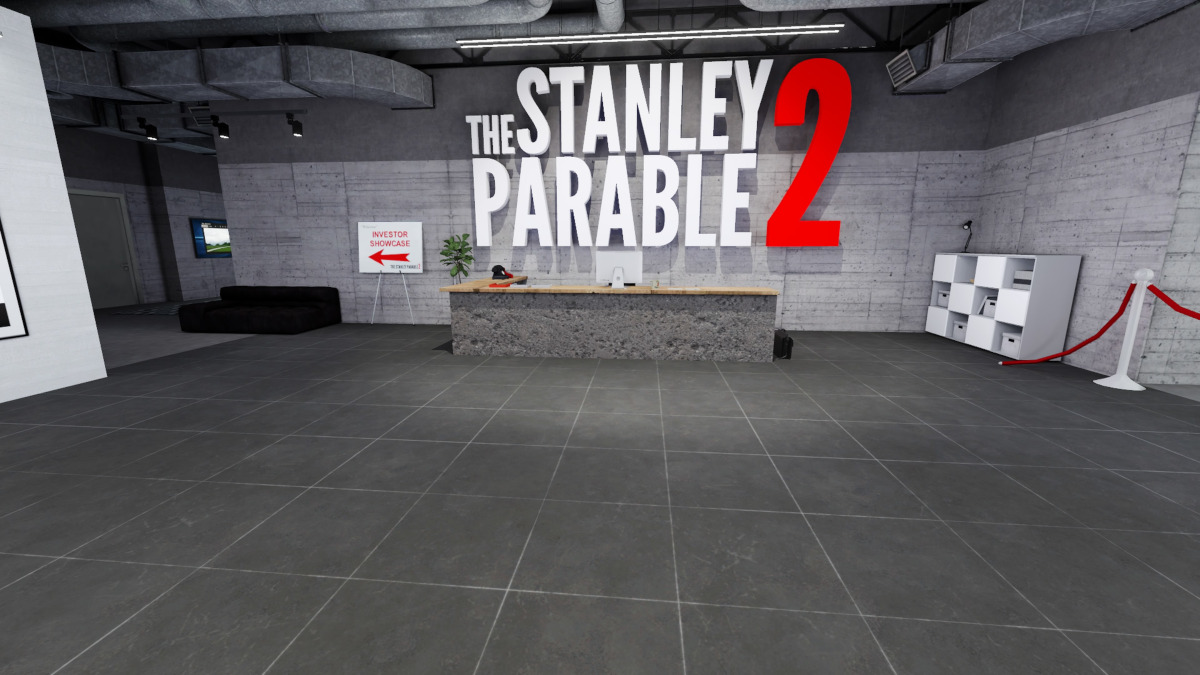
Would I, however, recommend The Stanley Parable: Ultra Deluxe generally? Yes. As a player of the kinds of games as which much of The Stanley Parable’s humor is directed, I can’t not get a kick out of it’s rib-nudging. Indeed, the narrator can be irritating at times, and of course it feels good to put that annoying, ceaseless voice in its place, even though I know I’m not really doing anything of the sort. I’m simply following a script down various branches to see what lays at each branch’s end. In The Stanley Parable: Ultra Deluxe, those branches might lead to a meadow, or a squirrel, or a museum, or a light show, or a fire, or an empty apartment, or the end of time. Navigating to each is up to the player, not by choice, but by design.

All images, including lede, were captured by author during PS5 gameplay of The Stanley Parable: Ultra Deluxe (© Crows Crows Crows).
 VIRTUAL BASTION
Great article, thank you 🙂
LikeLiked by 1 person