It seems like only yesterday that I began tackling the weird and wild world of law under the guise of fresh-faced defense attorney Apollo Justice. In fact, it’s been a few months since I began that journey thanks to the Apollo Justice: Ace Attorney Trilogy for the Switch, and it just recently concluded. When I last (and first) wrote about the game, I had so many questions. As it progressed and reached its end, I can at least say that most of my questions were answered. And yet, I still have many more! Will they be answered in the second game of the trilogy? Well, I suppose I shouldn’t get ahead of myself. Apollo’s story proved complicated, intriguing, and quite revelatory.

[Minor spoilers ahead.]
Fresh-faced defense attorney Apollo Justice likely did not expect that he’d be thrown headlong in to one murder case, let alone three, let alone that they’d entangle his hero, disgraced attorney Phoenix Wright who’s making bank through poker (and not playing the piano). Yes, I’m sure that all his “Chords of Steel” workouts didn’t prepare him for what was to come. And yet, he seemed to sail through the three cases with flying colors. Eh, mostly. He encountered a decent share of trip-ups and probably could have done his homework better, but in the end, Apollo did just all right, even though he had to witness the downfall of his mentor, Kristoph Gavin. And hey, he even came out of it all with a new family member, too. Strange, but on par for an ace attorney.
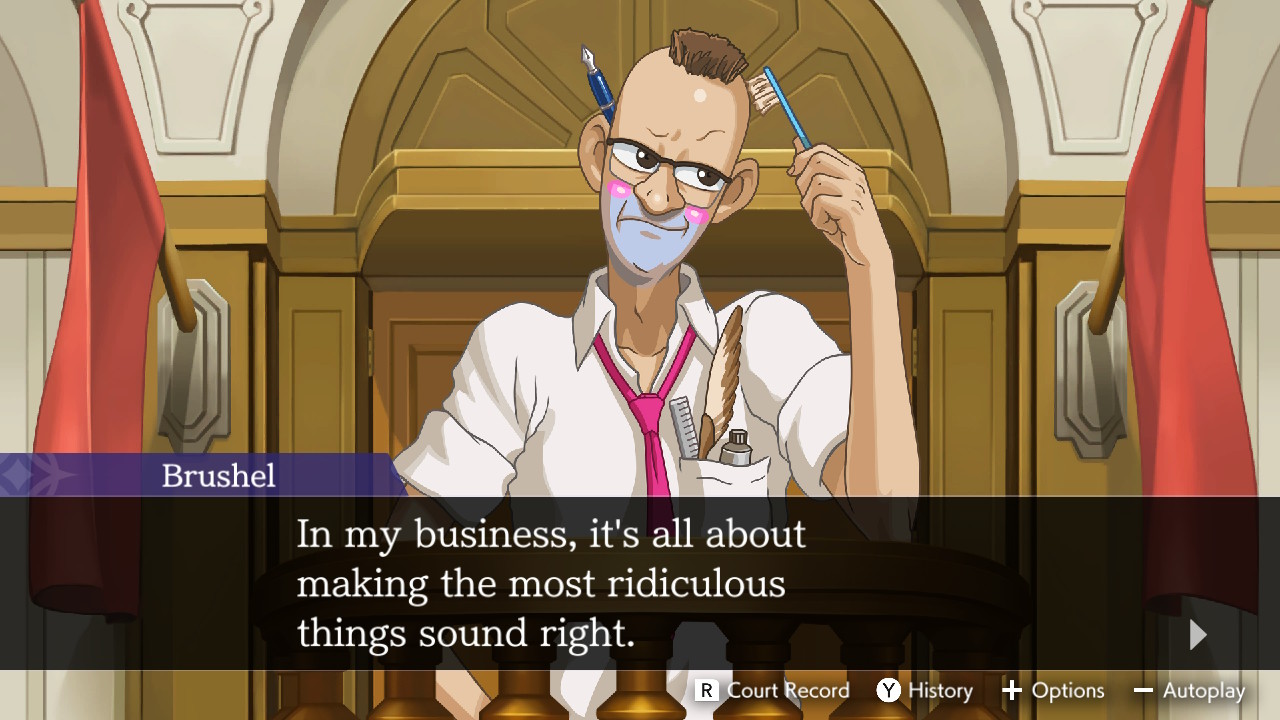
Apollo Justice: Ace Attorney featured four “Turnabout” cases: Trump, Corner, Serenade, and Succession. The case of Turnabout Trump saw Phoenix Wright on the stand for supposedly eliminating a poker-playing traveler by the name of Shadi Smith. Turnabout Corner brought the kindly mob to into the mix with one Wocky Kitaki of the Kitaki Family taking the blame for the death of doctor Pal Merkatis. In Turnabout Serenade, Apollo defended the young Machi Tobaye against the claim that he took out an Interpol agent named Romein LeTouse. And finally, things ended on an “artistic” note in Turnabout Succession with the mysterious death of artist Drew Misham, his daughter Vera, the culprit. And entangled throughout was Troupe Gramarye, a once successful and respected family of famed magicians with more than tricks up their decorated sleeves.
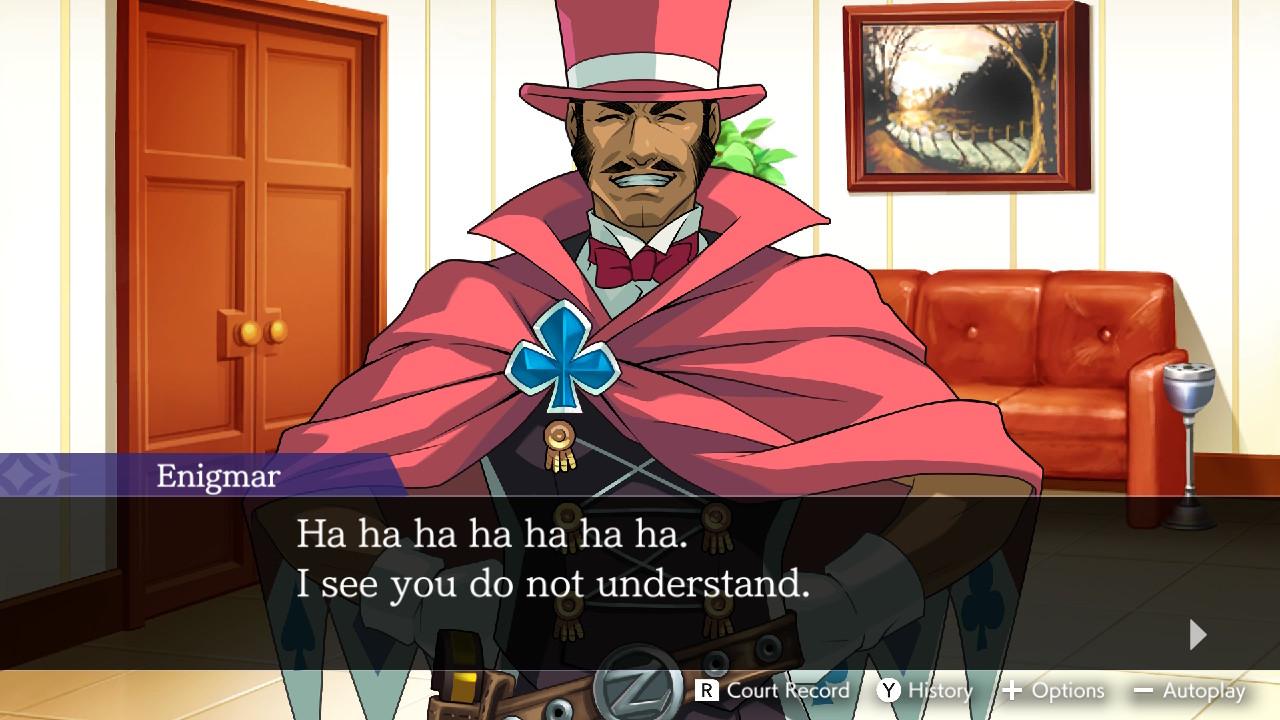
On paper, as simple descriptions, it appears that each case has nothing to do with any of the others. Until Turnabout Succession, I thought the same. There were some overlaps, with recurring characters and inferences, but me being a bit dense when it comes to these games, I didn’t pay them much attention. So, upon getting to the final case and realizing that it was going to bring together events past and present, I had to make sure my thinking cap was extra snug. There was a good bit of memory juggling on both my part and the game’s. The past explored a few elements, such as how Phoenix Wright’s fall from grace happened and who was behind it – the answer there didn’t come as much of a shock. It also brought to light Trucy’s situation as Phoenix’s adopted ward, and Apollo’s too, in a way. The reveal of the nature of this odd “family” was something I didn’t see coming, and “the end,” as it were, felt a little dissatisfying.
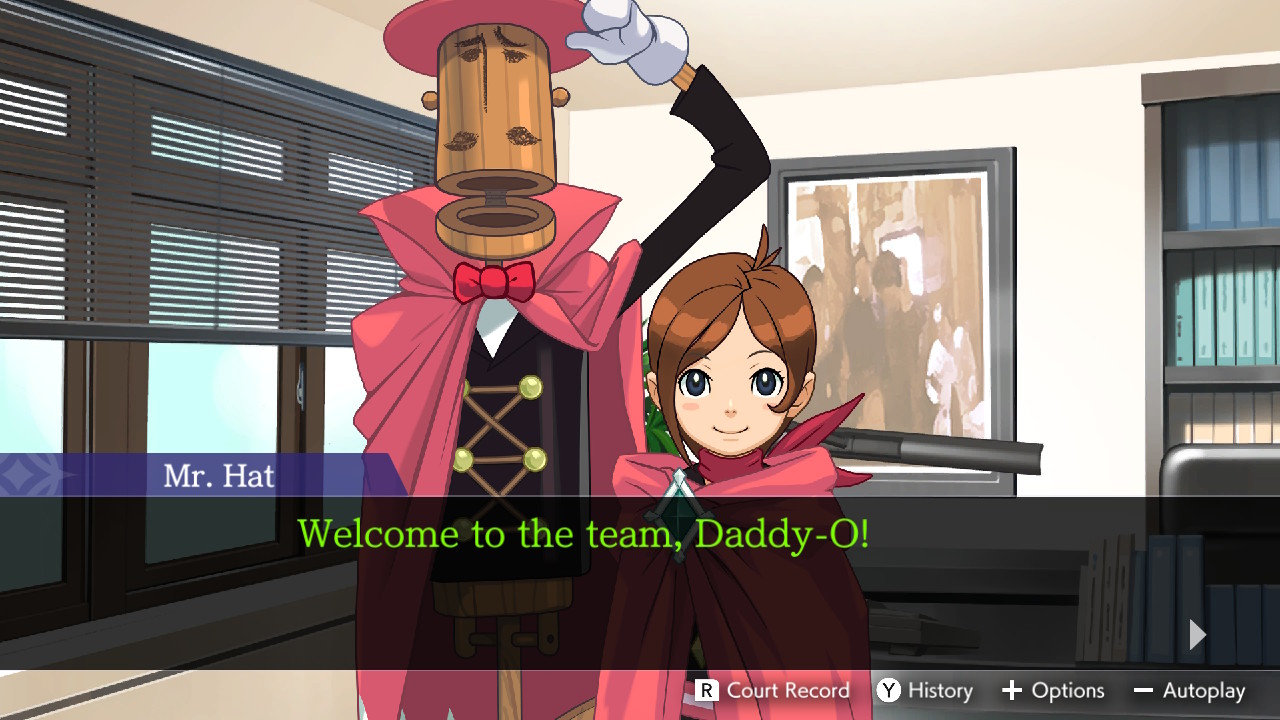
I’m being vague on purpose to avoid serious spoilers, for one, but the game’s story is also rather murky in spots. I recall having similar feelings well up during the first Phoenix Wright trilogy. Apollo Justice: Ace Attorney was brimming with charismatic characters, tongue-in-cheek humor, and wacky scenarios. I’m not a visual novel game expert, but it’s clear Capcom knows what this audience wants. But between the numerous twists, turns, and red herrings, I usually found myself more confounded than not when it came to actually trying to “solve” the cases. I proved to be great at missing cues, presenting wrong evidence after wrong evidence before finally getting it right…and then not fully understanding the logic behind why. From the previous Ace Attorney games, I knew logic leaps would persist; I knew I’d need to let go of streamlined thinking – this wasn’t a TV crime procedural where point A led neatly to point B, and so on. It helps to have a “backseat” mindset when working through one of these games. Though the game masterfully makes it feel like players are at the wheel, they are just moving the chess pieces at another’s behest.
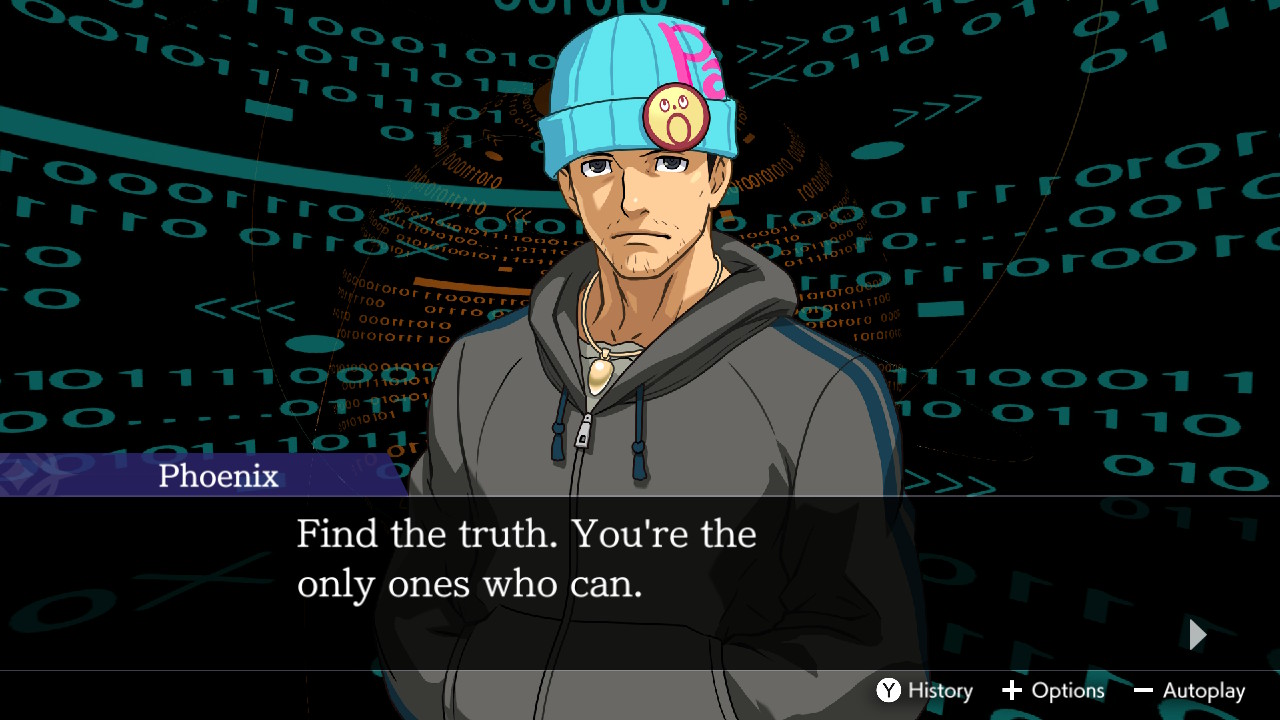
I like Apollo Justice, his “Chords of Steel,” his young wit and naiveté, and his “I can win at this” nature that was at once confident and anxious. Witnessing Apollo go up against and eventually take down someone he thought was in his corner was something to behold, and I hope he’s not gone forever. (Apollo, that is.) In a way, I almost wish there had been less Phoenix Wright in Apollo’s self-titled game, the kid can clearly stand on his own two feet. The cases he had to manage were confusing at times, but no less enjoyable to play from accusation to culmination. Will Apollo have the bright future that I envision? Guess I’ll find out in the next game in the trilogy: Phoenix Wright: Ace Attorney – Dual Destinies!
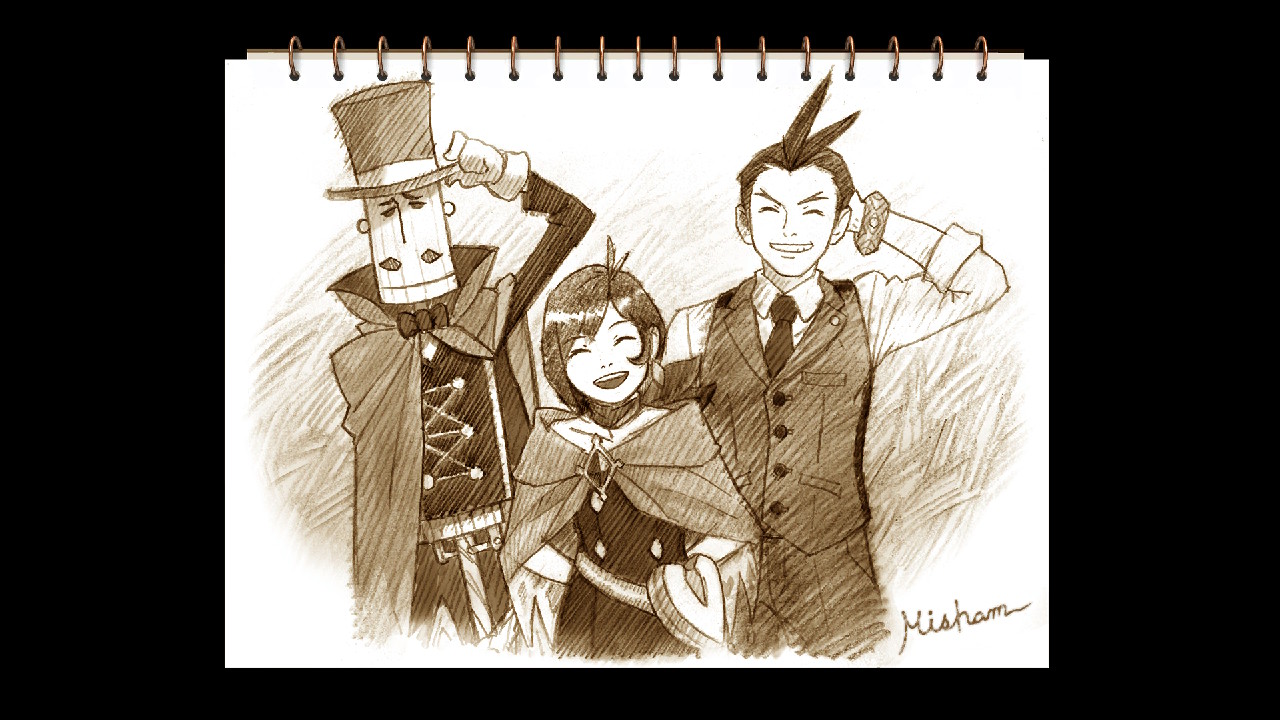
All images, including lede, were captured by author during Nintendo Switch gameplay of Apollo Justice: Ace Attorney (© Nintendo).
 VIRTUAL BASTION