After defeating the final opponent in Street Fighter 6’s World Tour with my level 60 fighter, Petra, all I could think was “what’s next?” The story may have been over, but Petra’s journey wasn’t. If nothing else, she still had forty more levels ahead of her! It turned out that Capcom had thought about that, too; and that if I wanted to make Petra the level 100 fighter I knew she could be, I could do just that…with a little work. But, what of this journey that start out so humbly at Buckler’s training center with a burly fellow named Luke? Let’s take a look back.
The World Tour begins with the premise that you, a novice fighter, are seeking to become the best of the best. After meeting your trainer, Luke, you craft the look of the fighter of your dreams and begin your training. At the end of all the introductions, you meet (fists first, so to speak) another trainee named Bosch, and Luke introduces everyone to the wonders of Metro City. Overseen by Mayor Mike Haggar (of Final Fight fame, for one), Metro City is a metropolis under construction. There are shops and vendors, spots to explore, secrets to find, and plenty of residents to challenge in random fights. At the end of the tour, Bosch parts ways with you and Luke, saying, somewhat ominously, that he has to go off and do something on his own. That “something” becomes the crux of the mission-based story you follow through the game.

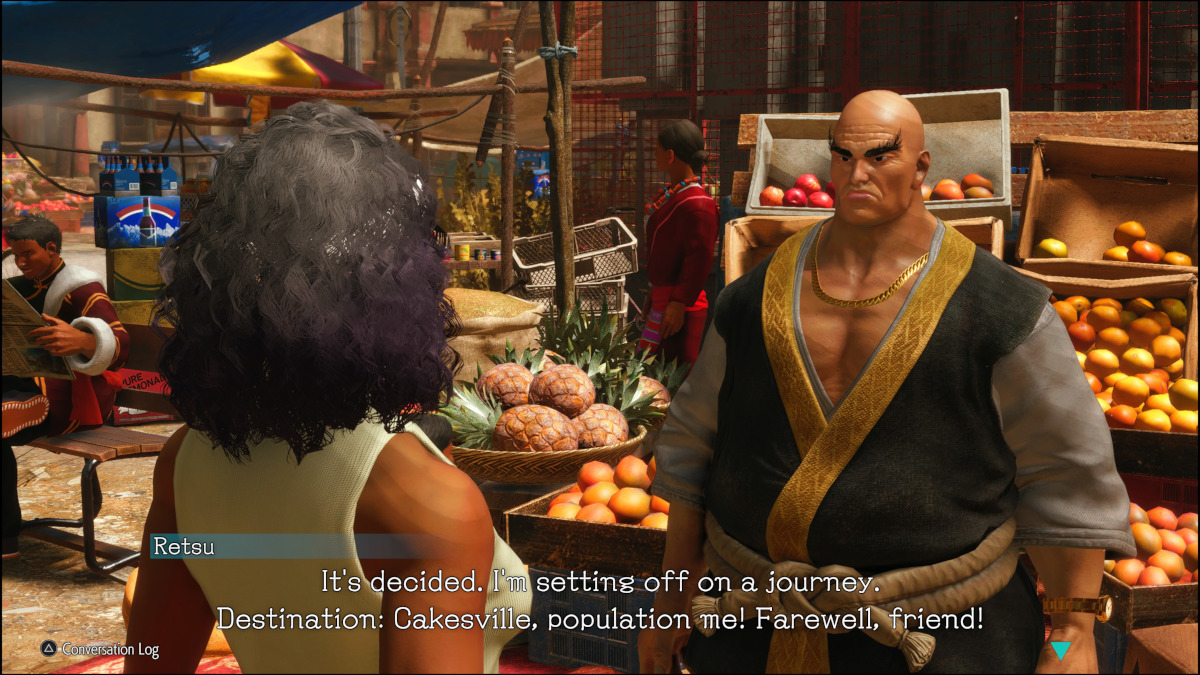
There’s a lot to talk about in reviewing the World Tour, but let’s start with the story. Without spoilers, it was surprisingly intriguing but very uneven. It was the kind of story that, I imagine, read well on paper but got lost in translation in-game. One issue is that, outside of cutscenes, everyone is rather dead-eyed and expressionless. Graphically, the game is in the style of “Street Fighter,” and characters talks with their fists rather than faces. Without facial animations, all the dialogue comes off as flat. This contributes to the overall story feeling less compelling, and frankly brutal, than it is. And if you’re not familiar with Street Fighter lore, the everyone’s visual lack of emotion also makes it difficult to distinguish the known “villains” from the “heroes.” Not that this matters much as far as the “masters” go – they’ll all take you in no matter what – but it did matter when the story’s villains were made known. I missed this big reveal the first time I encountered it; but I received plenty of chances to re-read the situation.

Indeed, the World Tour is all about fighting, which is what you’ll spend most of your time doing. This is where the game shines. Once you get past the initial tutorial with Luke, which is done using the game’s new “modern” 3-button control scheme (a la Super Smash Bros., as an example), you are given the option to instead use the “classic” 6-button control scheme that Street Fighter is known for; and you can switch between the two whenever you want. (Notably, if you choose the classic scheme, there are a few challenges that require the use of the modern scheme for completion.) I tried both and stuck with the classic scheme, as that muscle memory proved too strong to give up. But even then, my tendency for button mashing did me no favors. Nicely, in the World Tour, you can make use of healing, buff, and debuff items, prolonging (or not) your ability to make it through matches. I’ll admit that early on I was like “pssh, energy drinks are for rookies!” Well, by the end, you best believe I was consuming them faster than gym nuts. I also had to learn to “game” the system, or…cheese if you like. Because enemy AI works in routines. Once you get a handle on a challengers’ routine, it’s (usually) easy enough to defeat them using even the most basic of moves. Sure, there’s nothing like pulling off a super cool stage 3 Super Art combo to finish a match but done is done when you get right down to it.
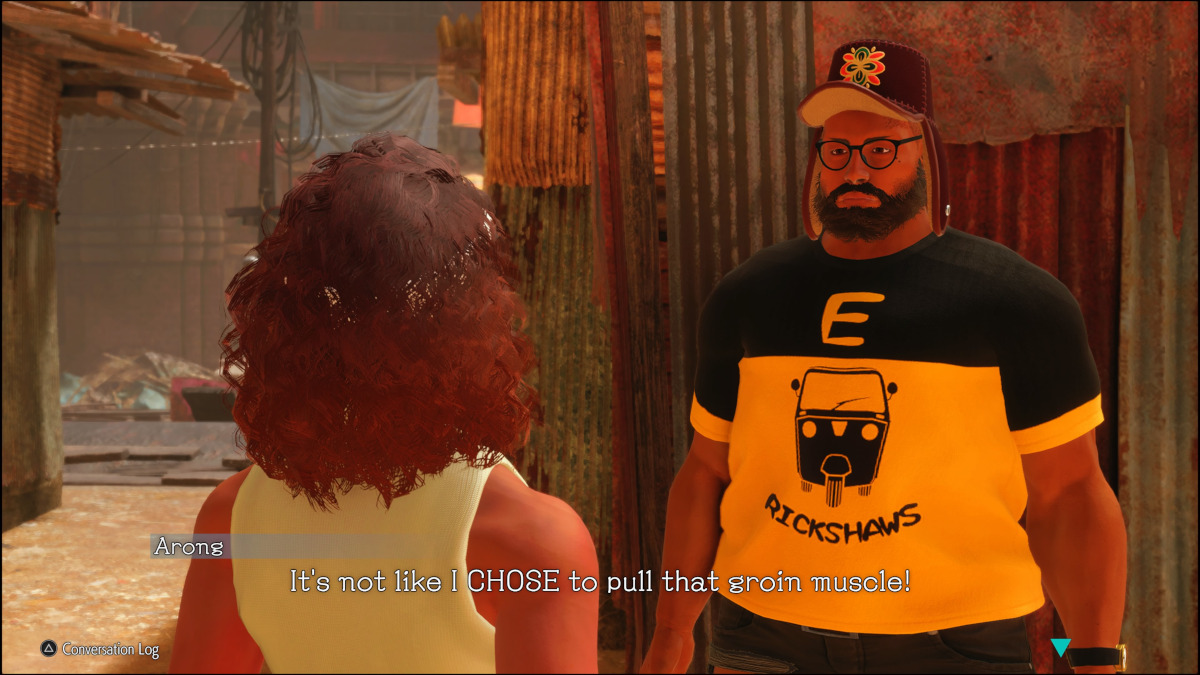
So what of the role-playing aspects that set the World Tour in a genre all its own? They aren’t half-bad. As Capcom heavily advertised before the game came out, a major draw of the World Tour is creating your own unique fighter. This includes your character’s look, gear, fighting style, moves, and skills. Starting with your fighter’s looks, after the initial character creator, and once you gather up some in-game currency called “zenny,” you can head to a style salon, where you’ll be taken back to the character creator. You can change one thing or everything about your fighter and just pay a single fee. Meanwhile, you’ll gather up loads of gear as you progress through the game. Some comes by way of completing missions, some drop from random enemies and challengers, some you get by working with your masters. And, of course, there are several stores and vendors that sell gear, too. Comprising gear is an array of clothing and accessories, and even a full outfit or two, and most every piece comes with some sort of perks to build your stats, such as defense, punch strength, kick strength, and so on. You can even gather and use items to further enhance a piece of gear’s individual stats. And with the “gear appearance” feature, there’s no need to worry if you don’t like the look of some high-level piece. Just click over to the “gear appearance” page and skin the things you like over the things you don’t. You can also save your favorite outfit, so you’ll be ready for any occasion!
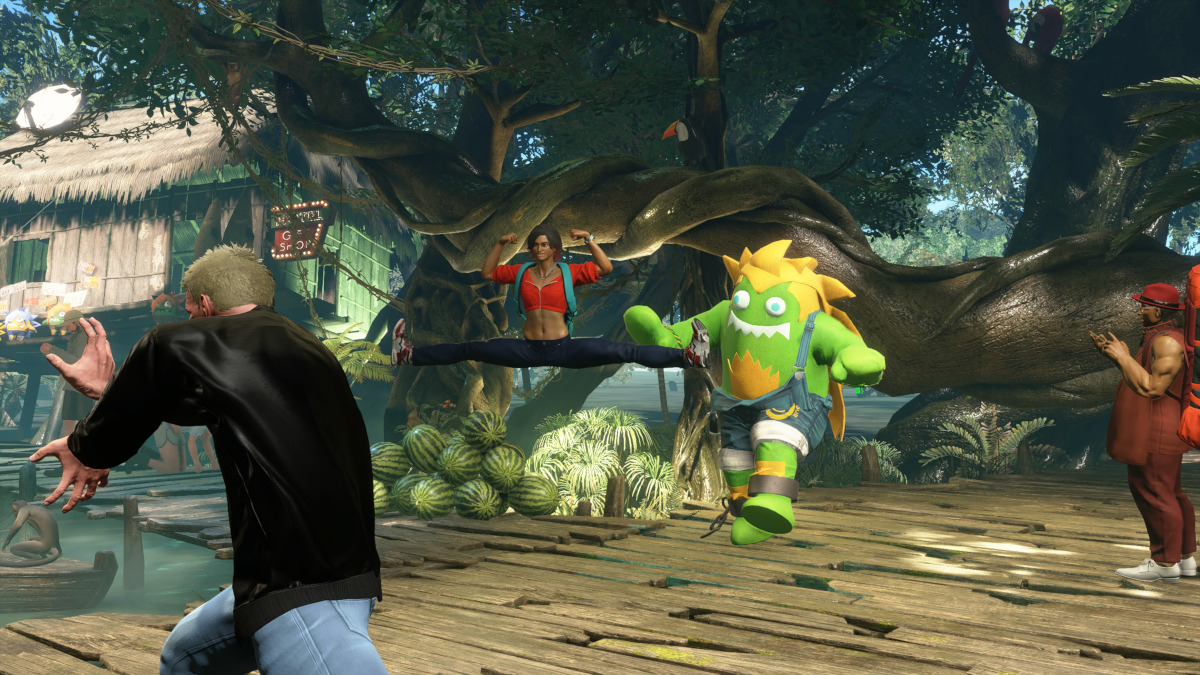
Beyond your fighter just looking as cherubic, demented, or other-worldly as you’d like, an even bigger plus to the World Tour package involves styles and special moves. As you meet and become students of SF masters, not only can you interact with them regularly, learning their stories and even offering the gifts, but they’ll give you access to their individual styles and special moves. At the start of the game, Luke’s fighting style and moves are the first you’ll receive, for example. Enroll with a new master, obtain their style and moves, and switch any time you want. What’s the difference between style and special moves? Fighting style pertains to the basic stance, punches, kicks, and throws of any given master. SF6 introduces new drive rush moves that will vary from master to master, but you’ll get those, too. Special moves are the ones that, in essence, define a particular master, such as Zangief’s 360 Pile Driver, Ryu’s firey Hadoken, and Chun-Li’s Hundred Lightning Kicks. This also includes aerial moves and super arts – big, flashy combos that have their own 3-tiered gauge. The more you get to know each master, the more moves you’ll receive and can apply to your own fighter. So, if you want your character to fight in Blanka’s style and be able to pull off Guile’s Sonic Boom projectile, Dee Jay’s Machine Gun Uppercut, and Marisa’s Meteorite super art, you can do that. Masters’ bonds max out at level 20, but you can continue to curry their friendship to level 100. I’ve so far only maxed out Luke and Ken’s bonds, and I’m on my way with Cammy, so I’ve still away to go in that regard.

One final thing to note is the skill trees. You your fighter levels up, you’ll gain skill points that can then be applied, in order, to five different skill trees. (The trees themselves are identical; the skills between each change.) There are lots heads/tails choices to make, and the skills dole out everything from increased vitality (HP) and defense, to increasing the power of your punches and kicks, to increasing the number of open slots for special moves and gear. Respecing your skills is possible, though doing so takes away a good chunk of your miles. Miles serve as “continues” for when you get knocked out in battle. 10,000 miles equal one continue. Respecing skills requires ten continues, so unless you’re perfectly invincible, you have to save up your miles if you’re desperate to respec.

Speaking of “desperate,” the World Tour isn’t all fun and games. Oh no, no, nooooo. I’ve already mentioned here, and alluded to in a previous post, that I’ve had to “cheese the system” to get by, which is mostly made up of me spamming projectiles during boss fights. I encountered a handful of bosses that nearly made me quit my tour. They were just unfairly difficult…which is usually how it goes (with me) in fighting games. I’m moving along smoothly, taking down enemies, and them BAM! A brick wall of a boss shows up. Ones that had to be defeated for the story to progress. Enter The Grind. Ugh. In nearly all cases that I can recall, I reached these problematic challengers at levels just below or at theirs, meaning that, in theory, I should have been mostly matched with them. I know I’m no fighting game pro, but this was never, ever the case. I was always outmatched, with me barely able to chip away at their health bars, while they removed half my health with a single blow. In at least one case, the thing that helped was altering my special moves to ones that gave me a slight edge. This is a fine tactic of you don’t mind the micromanagement. I don’t, so to the grind I went, getting myself at least five, if not ten levels ahead of the boss at hand. While I’ll admit that the grind helped me hone my abilities, it really made no sense to me that I had to be level 40 to defeat a level 30 fighter, because only then could I make sizeable dents in their previously immoveable health bars. By the time I reached the end of the game, I moved solely to cheesing the bosses, using all the energy drinks I could to keep my health up, and enhancing my gear to the fullest, which is how I came through only at level 60. I would have been much more comfortable at level 70 or higher (100 is the max, I think), but with other games grabbing my attention at the time (Starfield and Baldur’s Gate 3 were then on the horizon), I just didn’t want to waste my time.

About a week after completing the World Tour, or at least getting the achievement for doing so, I got an email from PlayStation “congratulating” me on the accomplishment and stating all the things in the game that were left to do. Yes, it’s true that, in a way, completing the World Tour could only be seen as a beginning. For one, I still have lots of masters’ bonds left to max out. With the addition of new characters, like recently with Rashid, comes the chance to work with new masters in the tour. There are also tournaments to complete, and more than a few very high-level fighters on the map awaiting their chances to go three rounds with Petra. There may even be some secrets I’ve yet to find – the game’s maps are small but have lots of hidden corners and pathways. I may not jump into the World Tour as frequently now that other games are on my plate, but I do see myself paying regular visits in the weeks to come. If nothing else, I want Petra to reach level 100; it would be a neat personal accomplishment.
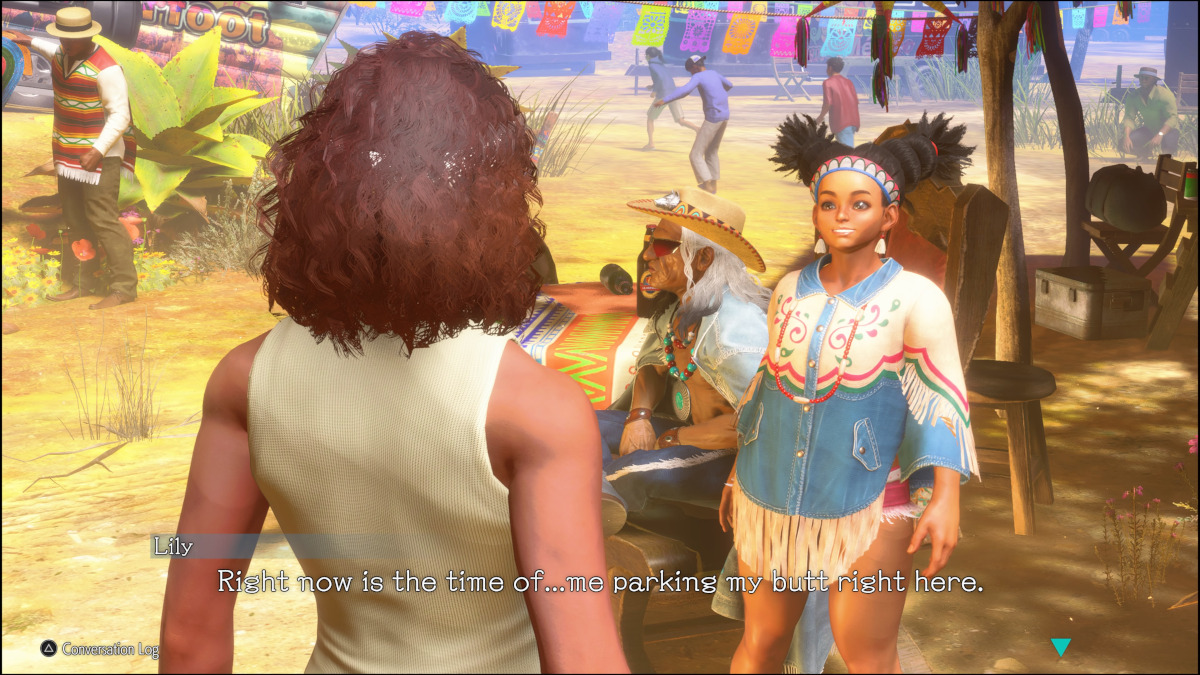
While I have enjoyed and will continued to enjoy Street Fighter 6’s World Tour, I’m still left wondering: who is this mode for? Is it for the character crafters who want to bring strange fighters to life? Is it for the RPG fans who tried Super Smash Bros. that one time but didn’t quite get it? Is it for the fighting game enthusiasts who want to try something different while still being able to throw dragon punches and spinning kicks? It’s probably a little each – it works for me, and I’m a conglomeration of all three! Likely on the outskirts are hardcore Street Fighter fans for whom the World Tour could be seen as little more than novelty. There’s no competition to it, other than with oneself. There is, however, the opportunity to fight the avatars of other real-life players in SF6’s social Battle Hub, which may be something of a draw. But based on my few visits to it, there seemed to be more players dancing than awaiting battles.

Street Fighter 6’s World Tour sits in a singular place among gaming’s landscape, one that may not see the most visitors, but guarantees a good time, though maybe a short time, depending on one’s tolerances towards the game’s graphics and approach, for those who want to visit. As Capcom brings more fighters to the game generally, it will be very interesting to see how the World Tour evolves, or doesn’t. It has been a welcome and fun departure from my normal fare, both in terms of fighting games and RPGs, and I hope it has a decently long life.
All images, including lede, were captured by author during PlayStation 5 gameplay of Street Fighter 6 (© Sony, Capcom).
 VIRTUAL BASTION