At the end of Saints Row’s prologue, the “boss” shares a sly smile with the audience when one of their cohorts says that they’ve done just about everything there is to be done. It’s a clear nod to the fact that Deep Silver Volition (from the start?) made the Saints Row reboot into a live service game. They’ve even got a 2023 roadmap, with patches promised and new content in tow. When I started up the game in early May, they had just released new DLC that came with a new, free spot on the Santo Illeso outskirts to explore. Visiting that new spot, a small resort area called Sunshine Springs, brought my boss’s story to a close. Now that I’ve completed the game – or called it as “done” as I want it to be — a question looms. Do I want to pay for more Saints Row? Let’s take a look back at how things went down, and maybe an answer will arise.
[Some spoilers lie ahead. TL;DR Saints Row provides a decent time for fans of the franchise as a pretty but regressive and too-glitchy reboot.]
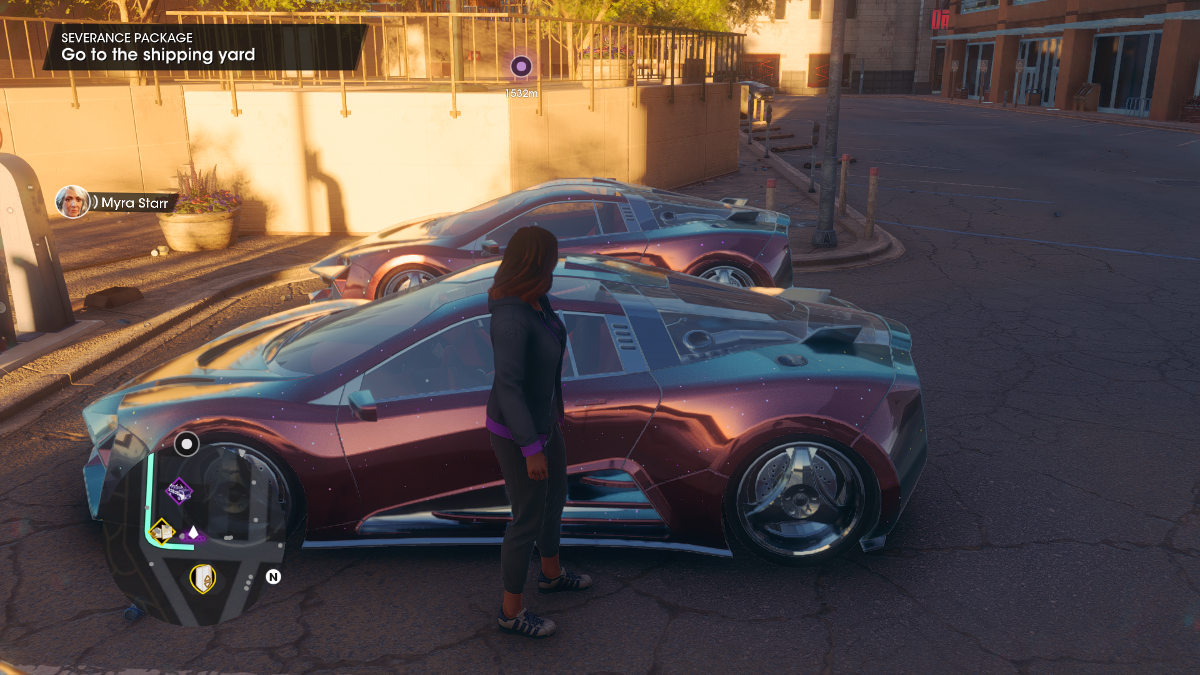
Picking up where I left off in my first impressions post, my newly-unemployed protagonist (the “boss”) had just started kicking the Santo Illeso pavement with her three friends, Kevin, Eli, and Neenah, for ways to make money. Their plan was to form a gang of their own – The Saints — one to compete with, and eventually overtake, two other local gangs, The Idols and Los Panteros, and deal with a para-military group called Marshall Defense Industries (MDI), for which the boss had previously worked. (Her Marshall knowledge would come in very handy during her rise to the top.) While the group focused on taking over Idols and Panteros territory, the boss wanted to end MDI’s reign by eliminating its chief founder, Atticus Marshall, while also humiliating her former MDI boss, Gwen, in (of all things) a LARPing contest.

The whole mess with Atticus proved even messier than the boss thought, and so she sought help in the form of “The Nauhualli,” a criminal mastermind she had helped capture with MDI. One prison break and lots of mayhem later, The Nauhualli and The Saints are the best of pals. For a little while, anyway. Long enough for The Nauhualli to embed himself within The Saints and eventually betray them. Seemed he wanted to take over The Saints all along, and so he shot and buried the boss during their big, celebratory “The Saints Rule!” party. Well, not even death could keep the boss down! After a quick trip through an afterlife, of sorts, she was back in business. She tracked down The Nauhualli to get her own revenge and subsequently made The Saints the ruling house of Santo Illeso.
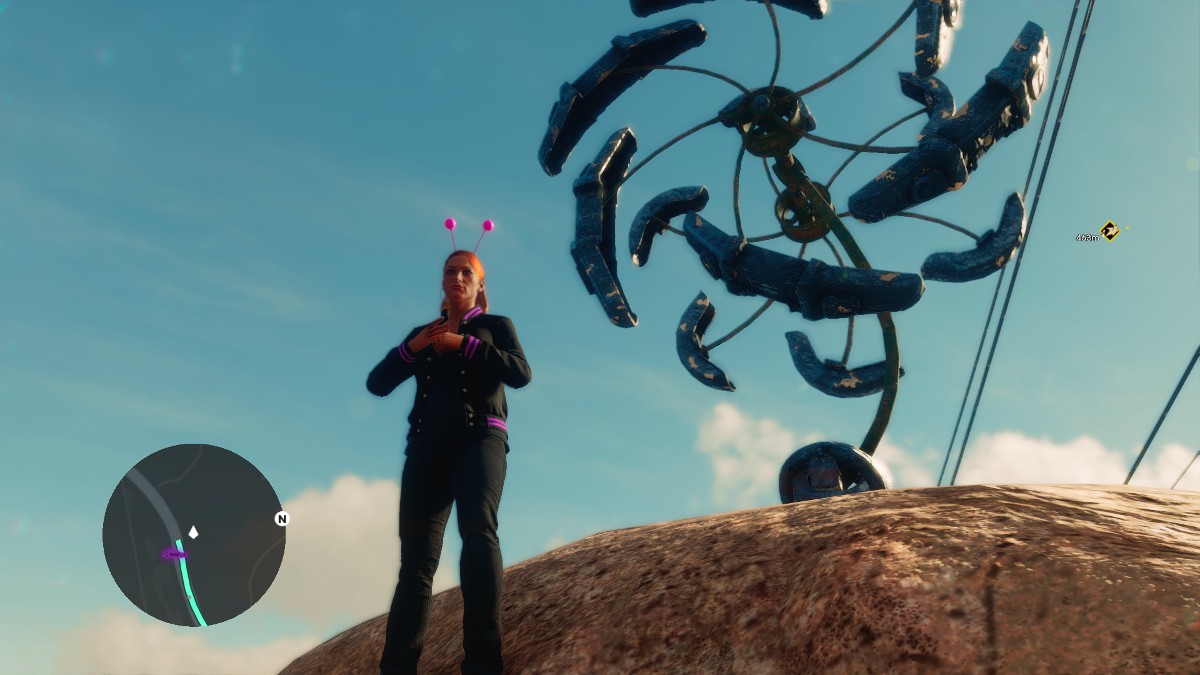
While watching Saints Row’s prologue, I sat recalling the game’s quick and somewhat disjointed story. It made me think (again) of how tough the pandemic was (still is?) on game developers. A fragmented team can lead to fragmented work; that’s just how it was, and people did their best. I honestly have no clue what went on behind the scenes of this game, but playing it made me think that less focus was put into the story – maybe because “live-service” lived in the back of everyone’s minds – and lots more went into creating Santo Illeso, because that world is the gem of this game. The story of The Saints’ rise was just not that interesting. The main story missions that focused on The Saints were routine (making fun of which was the very focus of the later, original SR games, as players know), with cut and dry resolutions, no consequences, and forgettable characters. Worse were the game’s “loyalty” missions involving friends Eli, Kevin, and Neenah. The whole LARPing side game that involved Eli was the most fleshed-out of the three; Kevin’s waffle-maker adventure and Neenah reclaiming her past from Los Panteros were both uninspired. The best and most memorable missions revolved around the building of The Saints’ empire within Santo Illeso, because, as I said, that world is the game.
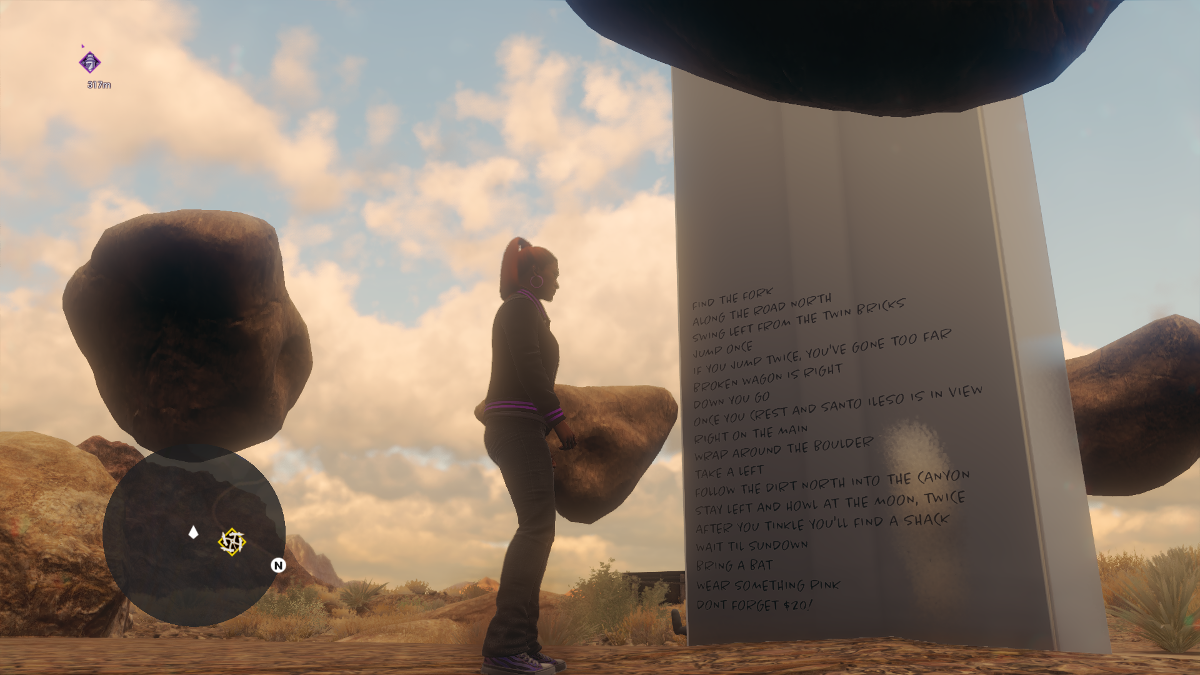
According to HowLongtoBeat.com, Saints Row’s main story can be completed in about 12 hours; completion last to about 50 hours. Given my time with it, I’d agree, and that’s a pretty sizeable gap. While the main story leaves a lot to be desired, I met several very interesting folks through the game’s various enterprises and side hustles (money-making adventures). The side hustles that featured various petty thieves and rapscallions trying to make it big were compelling in that with each one, the boss’s relationships with said folks evolved. The boss seemed interested and invested in their lives (though the levels of each varied), and by the end, it was clear that the boss had helped each one within their own “business plans,” so to speak. This is not to say that these little stories played out like deep, Shakespearean dramas, but they were far more thoughtful than any post-loyalty-mission time spent with the boss’s actual three friends. The banter than ensued when Eli, Kevin, and Neenah tagged along on any missions was severely disappointing. I’m not one for having my companion chatter a mile a minute in games, but their occasional utterances were pitiful, at best.
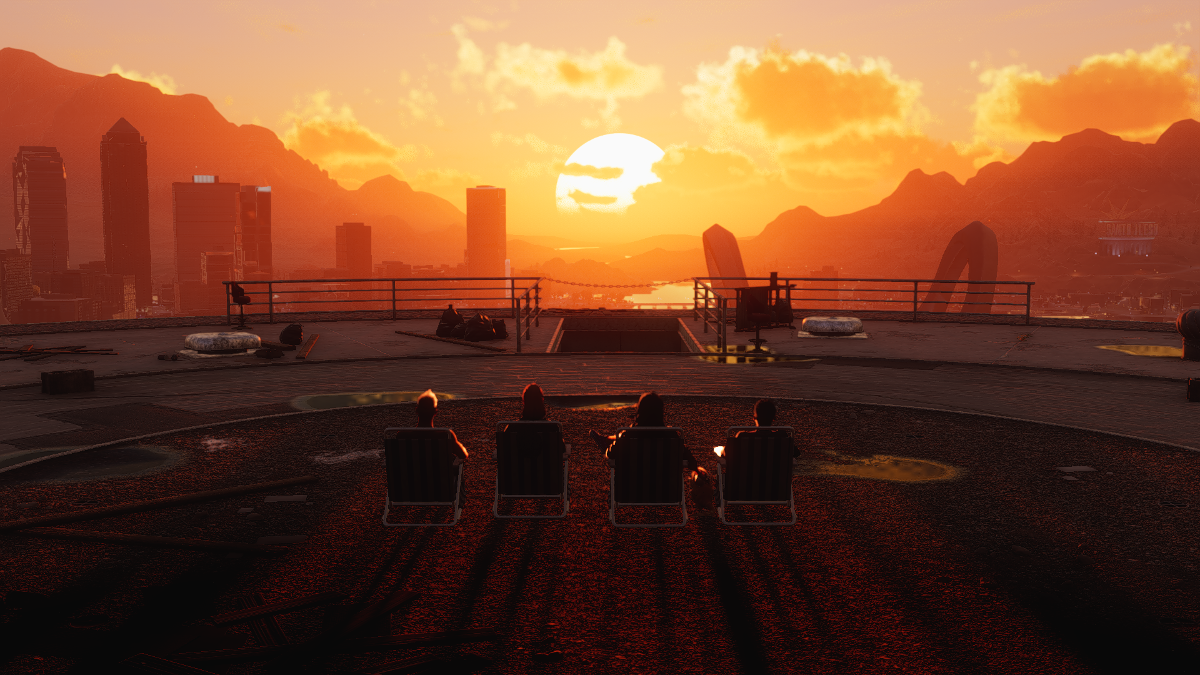
In the not too distant past, I attempted to do a second playthrough of Saints Row IV, and game that I truly enjoyed down to every last, silly mini-game. It wasn’t too long into that playthrough that I remembered its slog. So many mini-games. So many collectibles. So many towers to scale. So many of the same enemies over and over and over. Needless to say, I didn’t make it through. That sloggy feeling definitely hit in the new Saints Row, especially as I worked to complete the criminal enterprises. While the story has some unique qualities, these general activities were tiringly repetitive. (Most seemed directly lifted out of previous SR games.) Oh, I completed them, if only to lay claim to as much Saints territory as I could. However, if I were ever to try playing through the game with another boss, I think the same thing would happen that did with SRIV. I’d not be able to get past the slog.

If there’s one big complaint that reviewers had with this game, it’s that Saints Row did not represent much of a step forward for the series and was even seen by some as a step backwards. After SRIV, I understand that there was really nowhere else to go but back. Back to the beginning to revisit the building of an empire. As such, the game is very much like the type of game the third and fourth SR game’s poked fun at. It’s like GTA Online but dumber is the phrase that kept rolling through my head every time I played. The game did have some standout moments, and I nearly completed it despite its old-school, sometime tedious, mission-based experience. (I still have a few remaining collectibles to find, but I don’t know that I care anymore.) This brings me back to the question: do I want to pay for more Saints Row? I do not. I enjoyed what I played, but the game overall was only just good enough. On the upside, Santo Illeso itself was a gem. On the downside, the game was glitchy (especially the audio, at times), the character renderings and cutscenes were so-so, and the story was hardly captivating. It gets an “eh, it was fine” from me with the only recommendation that most spoke to me in the first place: if you really enjoyed the original Saints Row games, then you’ll probably like this one, too. At least for a little while.
All images, including lede, were taking by author during Xbox Series S gameplay of Saints Row (© Deep Silver Volition).
 VIRTUAL BASTION
Reblogged this on Recollections of Play and commented:
While I’ll easily give the Saints Row reboot a solid thumbs-up, in retrospect, the game is a reflection of what could have been. As I said here in my review on Virtual Bastion, it’s only just good enough.
LikeLike